



Trade shows remain one of the few marketing channels where companies can meet qualified buyers face-to-face in a concentrated environment. According to the Center for Exhibition Industry Research, around 81% of
trade show attendees influence purchasing decisions within their organizations.
Yet the same environment that creates opportunity also exposes operational weaknesses. A poorly coordinated booth build, delayed freight shipment, or weak follow-up process can erase the value of an otherwise promising event.
That is why trade show management should be approached as a structured operational discipline rather than a simple marketing activity. When trade show event planning follows a defined framework with ownership, timelines, and measurable outcomes, exhibitions consistently produce stronger pipeline and more predictable business results.
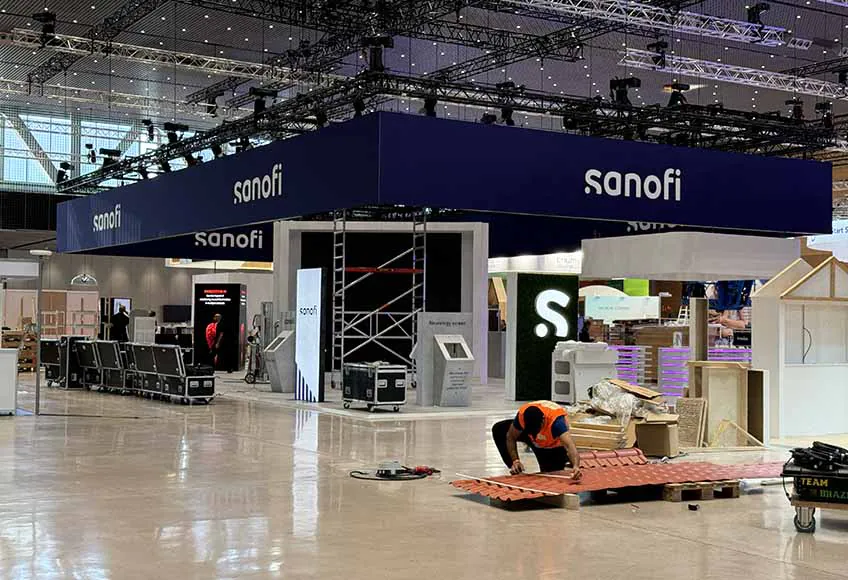
What Trade Show Management Means for Exhibitors
For exhibitors, trade show management is the coordination of multiple operational streams that must converge during a short window of time. Booth construction, logistics, marketing outreach, staffing, and lead capture all come together during a few intense days on the show floor.
A well-structured trade show planning guide helps companies navigate these overlapping responsibilities and avoid costly mistakes.
Trade show planners vs. exhibitors: who owns what
Many companies assume that exhibition organizers or trade show planners manage the operational complexity of participation. In practice, organizers focus on venue infrastructure and the overall show schedule. Everything inside the booth — messaging, booth setup, staffing, logistics, and lead capture — remains the exhibitor’s responsibility.
This misunderstanding often leads to avoidable problems. At a large technology exhibition in Las Vegas, a European exhibitor once arrived expecting internet connectivity to be included automatically. Only during move-in did the team discover that Wi-Fi had to be ordered weeks earlier through the exhibitor manual. Product demonstrations were unstable throughout the first show day.
Industry research by Freeman indicates that over 60% of exhibitors report operational disruptions caused by poor coordination between vendors and organizers.
Because of this complexity, many international exhibitors rely on specialized trade show management companies to coordinate logistics, booth production, and vendor communication.
The “show participation” project: scope, stakeholders, deadlines
Participating in an exhibition is closer to managing a temporary infrastructure project than launching a marketing campaign. Trade show event planning usually involves marketing teams, sales leadership, procurement, logistics partners, and sometimes an external trade show management company.
When these stakeholders are not aligned early, deadlines begin to collide. A common example occurs when marketing approves booth graphics after fabrication has already started. The production schedule stops, new files must be printed, and the company pays rush fees.
Research from Cvent shows that late internal decisions are one of the leading causes of exhibition budget overruns.
Treating the entire process as structured project management — rather than ad-hoc trade show planning — helps avoid these situations.
Success metrics that matter (pipeline, meetings, brand lift)
Some exhibitors measure success by booth traffic or badge scans. Experienced teams know that those numbers often hide deeper problems.
Meaningful indicators typically include qualified meetings, pipeline generated from show conversations, and visibility among strategic accounts.
A SaaS company recently shared a post describing its own trade show mistake: hundreds of leads were scanned at a conference, yet fewer than 10% matched the company’s target customer profile. The booth appeared busy, but the event generated almost no real pipeline.
This is why strong trade show exhibit management begins with clear definitions of qualified leads.
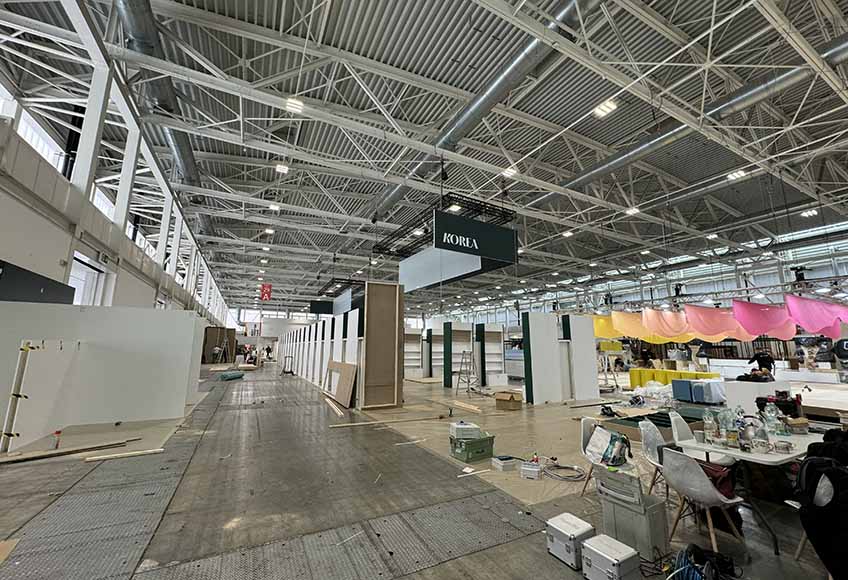
Trade Show Planning Workflow (Project plan, Not a checklist)
A strong trade show planning guide is not simply a checklist. It connects several operational streams that must move at different speeds but converge before the show begins.
Many companies choose to work with experienced trade show management companies when internal resources are limited. A professional trade show management company can coordinate vendors, logistics, and scheduling using a structured trade show management system.
Workstreams: strategy, booth, logistics, marketing, staffing, follow-up
Effective trade show exhibit management typically involves several parallel workstreams:
- strategic positioning;
- booth design and trade show exhibit management;
- logistics and freight coordination;
- marketing outreach and social media campaigns;
- staffing and booth staff training;
- lead capture and follow-up.
Many companies use digital management software as part of a structured trade show management system to track these workstreams.
A realistic timeline from 16 weeks to show day
Experienced trade show planners rarely begin planning a trade show less than four months before the event.
The early phase focuses on booth concept development and vendor contracts. The middle phase includes logistics coordination and marketing outreach. The final month centers on shipping verification and meeting scheduling.
One startup preparing for CES finalized booth graphics five days before shipping. The panels arrived with incorrect colors and had to be reprinted on site at three times the usual production cost.
Decision points that prevent last-minute chaos
Several milestones determine whether tradeshow planning proceeds smoothly or collapses under pressure.
Key checkpoints include the design freeze for booth graphics, shipping approvals, staff scheduling, and marketing campaign launches.
Missing these decisions forces teams into reactive mode during move-in.
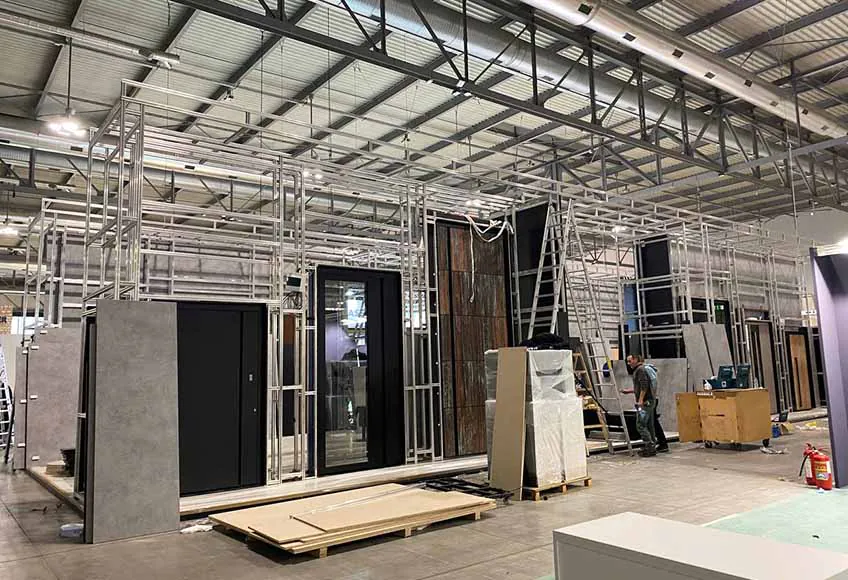
Budgeting for Trade Show Event Planning
Budget planning is often the least transparent part of trade show event planning. Many companies initially estimate only booth fabrication and travel expenses.
The real cost buckets (beyond “booth + travel”)
A realistic exhibition budget includes several categories beyond booth construction:
- booth design and fabrication
- freight and logistics
- installation labor
- utilities such as electricity and internet
- marketing campaigns
- travel and accommodation.
Hidden costs: drayage, I&D labor, overtime, utilities, late fees
Several hidden expenses frequently surprise exhibitors. Drayage — moving freight from the dock to the booth — can add thousands of dollars depending on shipment weight.
Additional costs often include overtime labor, electricity, internet services, and late service orders.
CEIR reports that logistics and operational costs can represent up to one-third of total exhibition spending.
How to build an “all-in cost” model for ROI reporting
Executives rarely evaluate exhibitions based solely on booth traffic. They want to understand financial return.
An effective ROI model connects marketing investment with pipeline attribution and revenue potential. Companies that invest in professional trade show management services usually gain clearer reporting structures and better visibility into pipeline attribution.
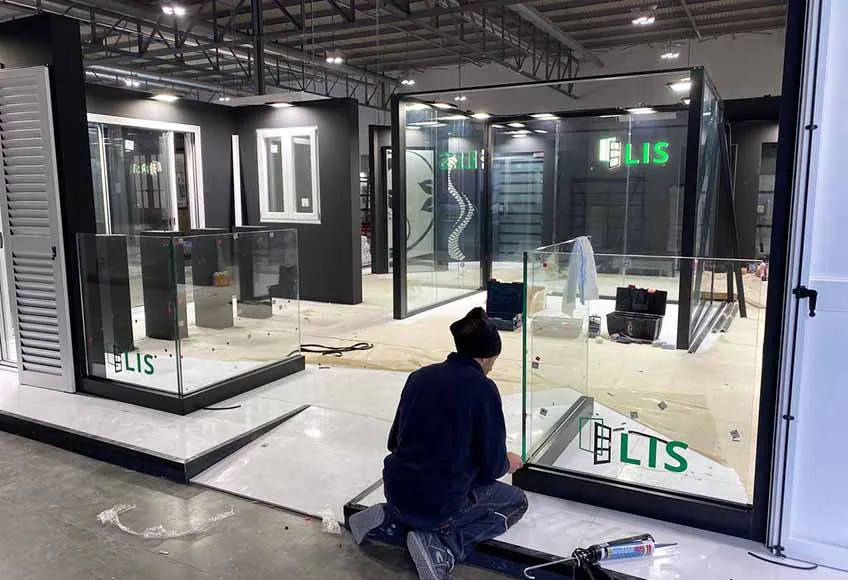
Booth Build Management (Design → Production → Onsite)
The booth is the most visible part of any exhibition, but also one of the most operationally complex components of trade show management.
Modern tradeshow management often relies on digital tools and management software that allow teams to track deadlines, logistics tasks, and vendor coordination.
Design freeze and change orders
Once booth production begins, design changes become expensive. A late modification can affect structural components, wiring, and graphics simultaneously.
Graphics files, proofs, and color control
Booth graphics require careful preparation. File resolution and color profiles determine how branding appears under exhibition lighting.
Pack-out quality checks
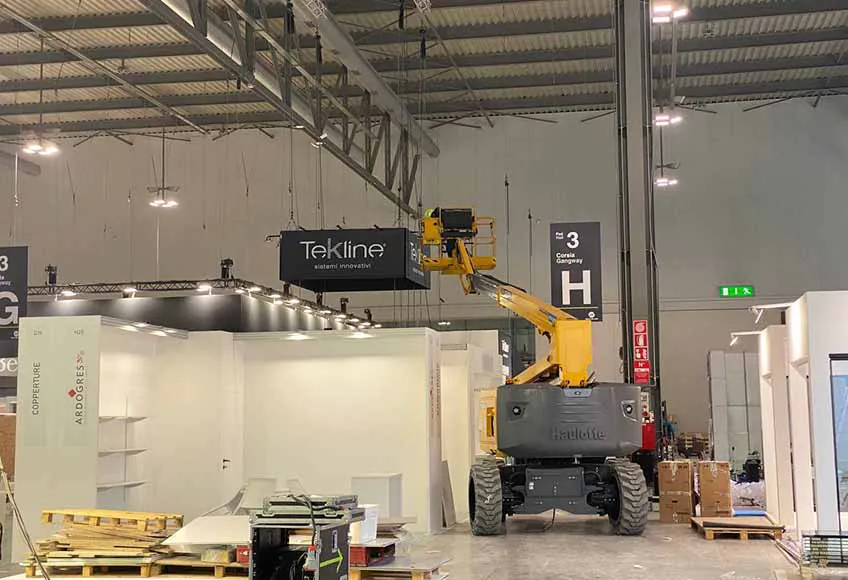
Before freight leaves the warehouse, every crate should be inspected carefully. Missing components may delay booth setup for hours during move-in.
Logistics & Show Services (the Exhibitor Manual Decoded)
Few documents are as important — or as misunderstood — as the exhibitor manual.
Advance warehouse vs direct-to-show shipping
Shipping to the advance warehouse allows organizers to process freight before the event. Direct-to-show shipping often leads to congestion during move-in.
Drayage/material handling explained
Drayage refers to moving freight from the loading dock to the booth location. Charges are typically based on shipment weight.
I&D labor and union rules
Many convention centers operate under union labor regulations. Missing installation windows may trigger overtime labor charges.
Service orders
Electricity, internet connectivity, cleaning services, and rigging are usually ordered separately through the general contractor or venue.
Risk plan
Even the best tradeshow management framework should assume that something will go wrong: delayed freight, damaged crates, or missing components.
Marketing and Appointments (How to Fill the Booth)
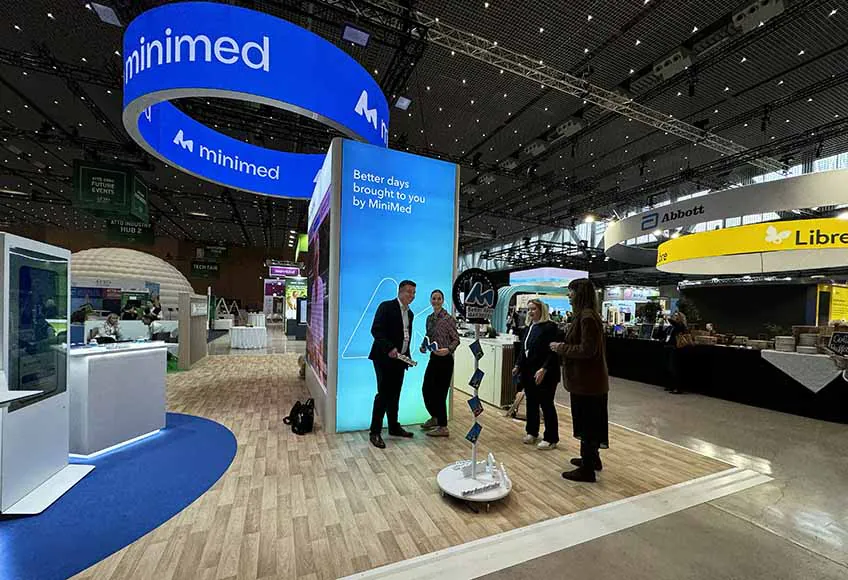
A visually impressive booth cannot compensate for weak marketing. In many companies the role of the trade show event planner includes coordinating pre-show outreach, appointment scheduling, and marketing campaigns.
Pre-show outreach that actually books meetings
Experienced trade show event planner teams start outreach weeks before the exhibition through email campaigns and targeted social media invitations.
Offer design: demos, consults, giveaways, and CTA clarity
Visitors rarely stop without a clear reason. A structured offer — product demo, consultation, or giveaway — provides that motivation.
Onsite visibility and content capture
Active booths attract attention. Recording demos and sharing social media content from the show often generates additional traffic.
Onsite execution (booth operations system)
The exhibition floor is where months of preparation meet reality.
Staffing plan: roles, shifts, and talk tracks
Clear staffing roles ensure that visitors are greeted, demos are conducted, and leads are qualified efficiently.
Lead capture + qualification rubric
Structured lead capture processes allow teams to categorize contacts immediately.
Daily run-of-show and issue log
Short daily briefings help teams track issues such as power failures, AV problems, shipping delays, or staffing adjustments.
Post-Show Management and ROI
Exhibitions do not end when the booth closes. Companies that invest in professional trade show management services usually gain clearer reporting structures and better visibility into pipeline attribution.
24–48 hour follow-up system
Research from Salesforce shows that lead engagement drops dramatically after the first 48 hours following an event.
Companies that delay follow-up often lose momentum with buyers who met multiple vendors.
Attribution: sourced vs influenced pipeline
Marketing teams measure performance through sourced pipeline and influenced deals.
Reporting template: what leadership wants to see
Executives expect a concise report covering leads generated, meetings held, pipeline impact, and total event cost.
Retrospective: what to change for the next show
The final step in trade show management is reflection. Teams review operational mistakes, messaging gaps, and logistics challenges.
Even experienced teams occasionally overlook small operational details that later create unnecessary stress. Something as simple as reviewing the exhibitor kit too late can lead to missed service deadlines or incomplete orders during booth setup. The same applies to booth planning decisions: a poorly thought-out booth layout may look attractive in renderings but create awkward visitor flow during the show. In practice, experienced exhibitors treat every exhibition as an event management project with clearly defined responsibilities, timelines, and checkpoints.
At the same time, operational discipline should extend beyond installation and show days. Teams that rehearse their elevator pitch, prepare for questions, and follow industry best practices tend to convert more conversations into meaningful leads. The final stage — move-out — is just as important. Proper crate packing, equipment verification, and documentation prevent expensive surprises when the booth is shipped to the next event. Companies that treat these final steps with the same attention as booth design usually build a more reliable and scalable trade show program.
These insights determine how the next exhibition will be planned.