


Most companies don’t lose at trade shows because they did something obviously wrong. They lose because everything almost worked.
The booth looked good. The team showed up. Conversations happened. But somewhere between setup, interaction, and follow-up, things didn’t connect. And that “almost” is exactly where budget disappears.
If you’ve been through a few shows, you’ve probably felt it. If you’re new — you will.
Let’s break down what actually happens during exhibiting at a trade show, and why the gap between plan and reality matters more than the plan itself. This article combines practical trade show tips, real trade show exhibitor tips, and proven trade show exhibit tips based on on-site experience, not theory.
How to Exhibit at a Trade Show
Most teams think they understand how to exhibit at a trade show because they’ve done it before.
But repetition doesn’t mean improvement. It often just means the same mistakes are repeated—only more efficiently.
Set goals that match your sales motion
I’ve seen teams come to a show with one simple instruction: “Collect leads.”
By lunchtime on day one, they’re scanning everything. Anyone who stops. Anyone who smiles. Anyone who looks vaguely relevant.
It feels productive. It isn’t.
Because at some point—usually after the show—someone asks:
“Which of these actually matter?”
And there’s no clear answer.
That’s where trade show ROI quietly collapses. Not because there weren’t leads, but because there was no definition of a good one.
When goals are specific (meetings booked, qualified conversations, next steps agreed), your trade show exhibit starts working differently. People don’t just talk—they filter.
Define your ICP and the “one problem” your booth solves
Here’s something you’ll notice if you stand at the aisle and just watch.
Some booths attract a crowd that moves through quickly.
Others attract fewer people—but those people stay.
The difference is usually not design. It’s clarity.
When messaging tries to cover everything, visitors need time to figure it out. Most don’t. They keep walking.
That’s how you end up with high traffic and weak trade show lead capture.
The strongest trade show booth ideas I’ve seen are almost uncomfortable in how specific they are. They clearly say, “This is for you”—and just as clearly, “This is not.” These trade show booth ideas are usually built around a very focused trade show booth design, where every element supports one message instead of trying to cover everything.
And that’s exactly why they work.
Choose the right show
Big events are tempting. They look impressive, they promise scale, and internally they’re easy to justify.
But scale doesn’t equal relevance.
I’ve worked on large shows where booths were constantly busy—and still generated almost no real pipeline. At the same time, smaller niche events with half the traffic produced stronger results.
Because people came with intent.
If your audience is not in a buying mindset, your trade show exhibit becomes a visibility exercise—not a business one. And visibility alone rarely justifies the cost.
How to Get a Booth at a Convention (Booking + Coordination Basics)
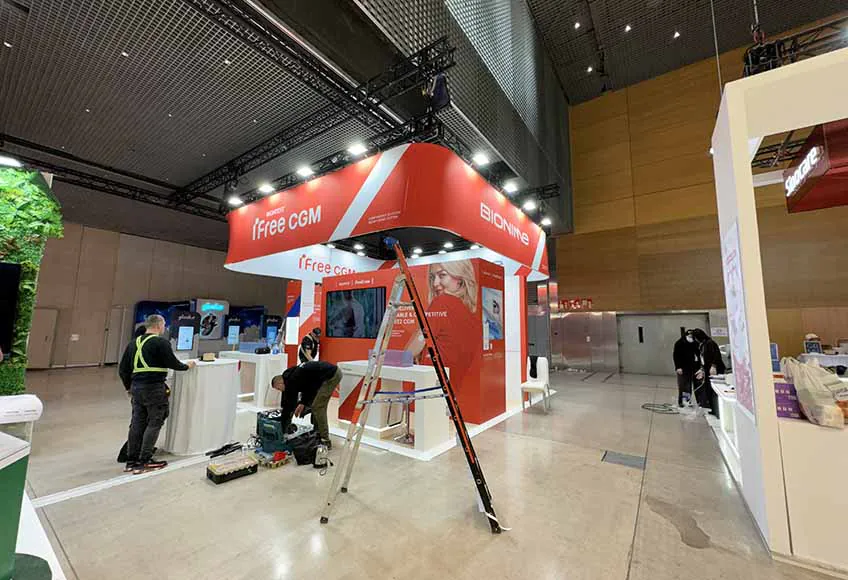
Booking a space is straightforward. Understanding what you’ve actually booked is where things get interesting.
This is usually the point where expectations start drifting away from reality—slowly and almost invisibly.
Booth for trade show: sizes, types, and what you actually get
A booth for a trade show rarely includes what people imagine.
You get space. Sometimes basic walls. That’s it.
Everything else—lighting, storage, structure, finishes—is your responsibility. In most cases, a functional exhibition booth requires additional planning beyond what the organizer provides, especially if you expect a high-quality exhibition booth design.
The gap between expectation and reality becomes obvious during trade show booth setup. Teams arrive expecting something close to a finished booth. What they see is an empty area with technical markings.
At that point, even small missing elements start to matter. Because now you’re solving them on-site, not in planning.
How to pick a location on the floor plan
Everyone wants traffic. It feels like the safest bet.
But here’s what happens in high-traffic zones: people don’t stop. They slow down, glance, and move on. Conversations start—and end—quickly.
By the end of the day, your team is exhausted, but nothing meaningful has happened.
In contrast, booths slightly off the main flow often have fewer visitors—but longer conversations. More context. More decisions.
Your trade show booth design can attract attention. But your location determines whether attention turns into interaction.
Trade show coordination timeline
Most issues don’t come from big mistakes. They come from small delays.
- A graphic approved late.
- A service ordered after the deadline.
- A decision postponed “until next week.”
Then next week becomes move-in.
The exhibitor manual is not just a checklist—it’s a sequence. Miss one step, and everything after becomes harder. Alongside the exhibitor manual, the exhibitor kit, and show schedule define what needs to happen and when—missing those details is where most coordination issues begin.
That’s why strong trade show coordination doesn’t feel fast. It feels quiet. Because nothing urgent is happening.
How to Set Up a Booth at a Trade Show (Booth Design That Sells)
By the time the booth is built, it’s too late to rethink it.
And yet, that’s exactly when many teams realize something doesn’t work.
Trade show exhibit layout principles
You can spot a weak booth layout instantly.
Visitors slow down… hesitate… and leave.
Not because they’re not interested. Because they don’t know what to do.
Where to stand.
Who to talk to.
What happens next.
If that’s not obvious, they won’t ask.
Strong trade show exhibit layouts remove that friction. There’s a natural flow, a visible entry point, and a clear place where trade show lead capture happens without breaking the interaction.
Signage hierarchy
When messaging is unclear, the team becomes the explanation.
You’ll hear it repeating across the booth—the same pitch, over and over again. By midday, it sounds automatic. By day two, it loses energy.
That’s not a people issue. That’s a structure issue.
Good trade show booth design does part of the work. The message is visible. The value is clear. Conversations start faster—and go deeper.
In practice, strong trade show booth design overlaps with exhibition booth design principles, where structure and messaging reduce the need for constant explanations.
Lighting, power, and internet planning
Technical issues don’t always look dramatic.
But they are felt immediately.
A demo that freezes.
A screen that’s too dim.
A connection that drops mid-sentence.
It breaks the flow. And once the flow breaks, it’s hard to recover.
Visitors don’t separate “technical issue” from “product issue.” For them, it’s the same experience. That’s why these details are part of real trade show exhibit tips, not just logistics.
Booth setup plan
Move-in is compressed time.
Every decision takes longer than expected. Every delay affects the next step.
And yet, this is when teams often start adjusting things. Moving elements. Changing layouts. Fixing details that should have been resolved earlier.
A controlled trade show booth setup is not about speed. It’s about arriving with no decisions left to make. This is where project management and overall management discipline become critical — without them, even simple booth setup tasks turn into delays.
Trade Show Advice for Generating Booth Traffic
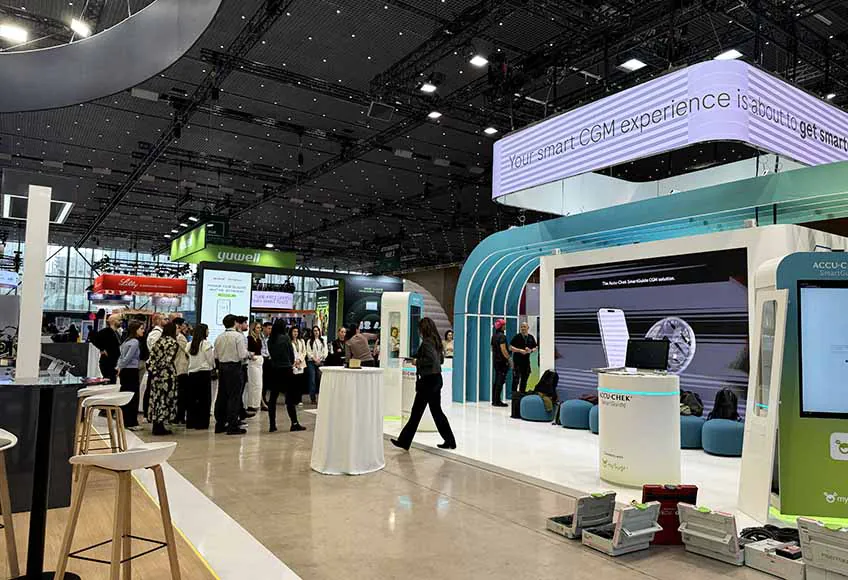
Traffic is easy to misunderstand. It feels like success. But it often hides inefficiency.
Pre-show outreach
If you rely only on walk-in traffic, you’re leaving your schedule to chance.
Some days will be busy. Others won’t.
Teams that consistently perform treat outreach as part of the show. Emails, LinkedIn, and social media—all used to book meetings before doors open.
This is one of the simplest forms of trade show advice for exhibitors and one of the most underused.
Onsite attraction
Not every booth needs something flashy.
In fact, the more complex the setup, the harder it is to explain.
Some of the best-performing trade show booth ideas are surprisingly simple. Clear message. Clear action. No confusion.
Visitors don’t need to be impressed first. They need to understand first.
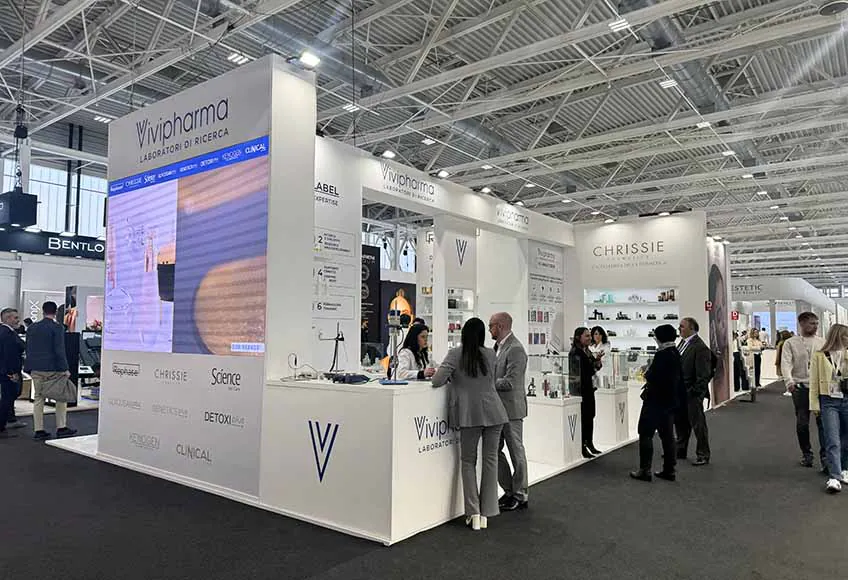
How to Sell at a Trade Show (a Simple Booth Sales System)
Most teams don’t struggle with effort. They struggle with structure.
The opener + qualification
Without structure, conversations stay polite.
People talk. They exchange information. Then they leave. No next step.
A natural elevator pitch followed by quick qualification changes that dynamic. It shifts the conversation from “interesting” to “relevant.”
That’s the difference between activity and results—and the core of how to sell at trade shows.
In reality, understanding how to sell at a trade show comes down to structure, not talent—the process matters more than the pitch.
The demo loop
Showing everything feels thorough.
But it usually creates confusion.
Visitors don’t remember features. They remember clarity.
Problem → proof → next step.
Anything beyond that is noise.
Closing behavior
At a trade show, closing doesn’t mean selling.
It means direction.
If a conversation ends without a next step, it effectively ends completely.
This is where many teams lose potential trade show ROI—not because conversations didn’t happen, but because they didn’t lead anywhere.
Trade Show Coordination: Operations, Logistics, and Risk
Most failures don’t look dramatic.
They look like small delays that compound.
Shipping and timing
Freight delays don’t just affect logistics. They affect readiness.
If key elements arrive late, your booth opens incomplete. And first impressions are gone before you can fix anything.
This is one of the most expensive gaps in trade show coordination. And the impact often continues into move-out, where rushed dismantling leads to damaged materials and additional costs for the next event.
Missing service orders
Power, internet, and rigging are easy to overlook.
Until you need them.
The exhibitor manual usually contains everything you need. But it requires attention. Skipping one line can affect your entire setup.
Contingency planning
Something will go wrong.
It always does.
Missing crates. Damaged graphics. Delays.
The difference is whether you expected it.
Strong teams don’t eliminate risk. They absorb it.

Booth Staff Training
A booth doesn’t perform. People do.
And you usually see that within the first hour of the show.
You can have a strong trade show booth design, a well-thought-out booth layout, and a good location—but if the team is not prepared, none of it translates into results. Visitors don’t interact with your stand.
They interact with your people. For any exhibitor trade show team, this is where preparation either shows or completely breaks down under real conditions.
And this is where things often start to break—not because teams don’t care, but because no one prepared them for how the show actually works.
Booth staffing
The issue is rarely the number of people. It’s how they are used.
I’ve seen booths with six people where no one engages visitors—everyone is busy talking to each other. And I’ve seen booths with two people who simply can’t keep up with the flow.
In the first case, visitors hesitate to interrupt and walk away.
In the second, they don’t even get acknowledged.
Effective booth staffing is about coverage and awareness. Someone should always be watching the aisle. Someone should be free to start a conversation. Someone should be able to continue an ongoing one without breaking flow.
Without that, even strong traffic doesn’t convert into anything meaningful.
Behavior rules
This is where small details have a big impact.
A phone in hand.
Closed body language.
Internal conversations happening at the front of the booth.
From the visitor’s perspective, it all sends the same signal: “this is not the right moment to approach.”
And the team often doesn’t notice it.
I’ve heard clients say, “we didn’t have enough traffic,” while standing next to the booth and watching people approach—then leave within seconds.
That’s not a marketing issue. That’s behavior.
Basic trade show best practices like staying engaged, making eye contact, and working the aisle politely are not minor details. They define whether interactions happen at all.
Основные рекомендации по работе на выставках, такие как поддержание внимания, установление зрительного контакта и вежливое общение в проходе, — это не мелочи. Именно они определяют, состоятся ли взаимодействия вообще.
Lead qualification
Another common pattern: collecting everything.
Every badge gets scanned. Every contact is stored. It feels productive during the show.
But after the event, that list becomes a problem.
Without structure, trade show lead capture turns into a volume exercise with no prioritization. Sales teams receive contacts with no context—and often ignore them.
On the floor, the difference is subtle but critical.
One team talks and moves on.
Another team talks, qualifies quickly, adds context, and defines a next step. Same conversation. Completely different outcome.
Role split
When roles are not defined, everyone tries to do everything.
One person greets, runs a demo, answers questions, captures the lead, and tries to move the conversation forward—all at once. Meanwhile, a new visitor is already waiting.
That’s where opportunities get lost.
Clear roles—greeter, qualifier, demo lead—create flow. The booth starts to function as a system, not a group of individuals reacting in real time.
And once that system is in place, everything becomes smoother: conversations start faster, transitions are cleaner, and visitors don’t get lost in the process.
Lead Capture and Follow-Up
This is the part most teams underestimate—not during the show, but after it.
On-site, everything feels active. Conversations happen, badges are scanned, notes are taken. It looks like progress.
But the real question is what happens next.
Because this is where a large part of the value is either converted or quietly lost.
Lead capture systems
During the show, collecting as many contacts as possible feels like the right approach.
It creates a sense of momentum. The team sees numbers growing and assumes it will translate into results.
But once the show ends, that volume becomes difficult to manage.
Without structure, trade show lead capture turns into a flat list of names with little or no context. Sales teams receive contacts they don’t recognize, conversations they didn’t have, and priorities that are unclear.
That’s when leads start getting ignored—not because they are bad, but because no one knows what to do with them.
The difference is not in how many leads you collect, but in how clearly each one is qualified and documented at the moment of interaction. Many trade show faqs from clients actually come from this stage—not how to get leads, but how to make them usable after the show.
Follow-up
There is a lot of emphasis on speed—the idea that you need to follow up within 24–48 hours.
That’s true, but only partially.
What actually affects response is not how fast you send the message, but how relevant it feels to the person receiving it.
A generic email sent quickly often looks like automation. It doesn’t reflect the conversation, and decision-makers recognize that immediately.
On the other hand, a message that references what was discussed—even if sent slightly later—feels like a continuation.
That’s what keeps the interaction alive and directly impacts trade show ROI. This is one of the most overlooked trade show tips, even among experienced teams.
ROI reporting
After the show, many companies struggle to evaluate results properly.
They have numbers—leads collected, meetings held, costs incurred—but those numbers don’t always connect to actual outcomes.
If you don’t track what happened to those leads—which ones turned into opportunities, which ones moved forward—every show starts to look the same on paper.
And when everything looks the same, it becomes very difficult to improve.
Clear reporting is not just about proving success. It’s about understanding where the process worked—and where it didn’t.
Most trade show advice focuses on preparation—what to design, what to build, what to plan.
But real results depend on what happens when that preparation meets the reality of the show floor.
Delays happen. Conversations go off script. Attention drops. Plans shift.
Trade shows don’t reward perfect preparation.
They reward systems that continue to work when conditions are not ideal.
And that’s exactly what separates average exhibiting at a trade show from a structured, repeatable approach that improves results over time.