



After ten years in an exhibition building, I’ve learned one uncomfortable truth: most companies don’t fail at trade shows because of bad products or weak sales teams. They fail because
they treat exhibitions as a visual exercise instead of a commercial one.
In real conditions, trade show marketing only starts working when the booth, the team, and the follow-up are planned as one system — not as separate tasks handled by different departments.
This article isn’t about textbook definitions. It’s about how trade show marketing behaves on the floor, between real people, inside real booths — and what actually turns exhibition traffic into sales conversations.
What trade show marketing looks like on the exhibition floor
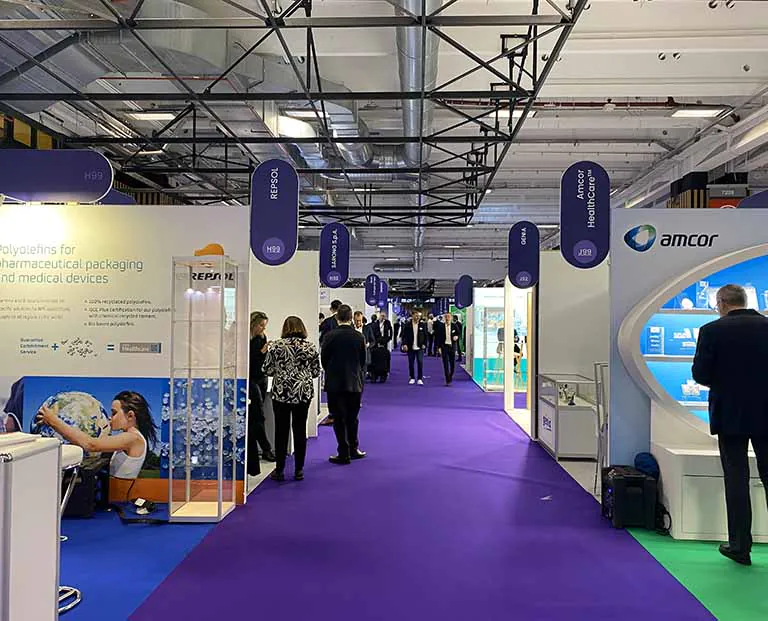
Forget theory for a moment. On the show floor, marketing is brutally simple: either a visitor understands why they should stop—or they keep walking.
What is a trade show in marketing—from a builder’s perspective
When clients ask what a trade show in marketing is, I answer like this:
A trade show is a compressed sales environment where your message competes physically, not digitally.
Unlike online channels, visitors don’t scroll — they move. They compare booths in seconds. They decide based on clarity, confidence, and relevance. Understanding what trade show marketing means means understanding movement, sightlines, noise, and decision pressure inside a limited space.
Trade show marketing, exhibition marketing, exhibit marketing—why the difference matters
These terms sound similar, but in practice they fail for different reasons:
- Trade show marketing fails when leads aren’t qualified or followed up.
- Exhibition marketing fails when brands chase visibility without intent.
- Exhibit marketing fails when the booth looks good but guides no behavior.
From a stand builder’s angle, results appear only when all three support the same trade show objective instead of fighting for attention.
Why trade show marketing still generates high-quality B2B leads

Digital channels are fast. Exhibitions are slow—and that’s exactly their strength.
Where B2B trade show marketing actually delivers value
In real projects, b2b trade show marketing performs best after initial awareness and before final negotiations. According to CEIR, 81% of trade show attendees have buying authority or influence, which explains why exhibitions remain one of the most concentrated decision-maker environments.
When trade shows outperform digital campaigns
Trade shows consistently outperform digital when:
- The product needs an explanation.
- Trust is built through dialogue.
- Multiple stakeholders influence the deal.
This pattern repeats across SaaS, manufacturing, industrial tech, and professional services.
What an effective trade show marketing strategy is built on
A booth without structure is decoration. A strategy starts much earlier.
Goals and KPIs that actually matter
Every trade show marketing strategy should answer three uncomfortable questions:
- Who exactly are we trying to meet?
- What qualifies a “good” conversation?
- What happens to that lead after day three?
Foot traffic without intent is noise—not performance.
Aligning trade show marketing strategy with sales reality
The most common breakdown in trade show marketing strategy happens after the handshake.
Booth Builder case (industrial manufacturing):
At an industrial exhibition, a client’s exhibit booth attracted steady attention — but leads were scattered across notebooks and business cards. The next event we restructured the stand flow: greeting → demo → digital lead capture synced to CRM.
The change wasn’t visual. It was operational. That quarter, more than 60% of closed deals traced back to that exhibition.

Planning exhibit marketing backward
Successful exhibit marketing always starts with deadlines:
- design freeze
- custom build window
- staff training
- pre-show outreach
When these steps are rushed, the booth pays the price during the show.
How to build a trade show marketing strategy that brings leads
Results come from sequencing, not inspiration.
Pre-show trade show marketing that filters the right visitors
Effective trade show marketing begins weeks before the hall opens:
- direct outreach to target accounts
- LinkedIn invitations
- booked demo slots
Exhibitor Magazine reports that pre-show promotion can lift booth traffic by up to 40%.
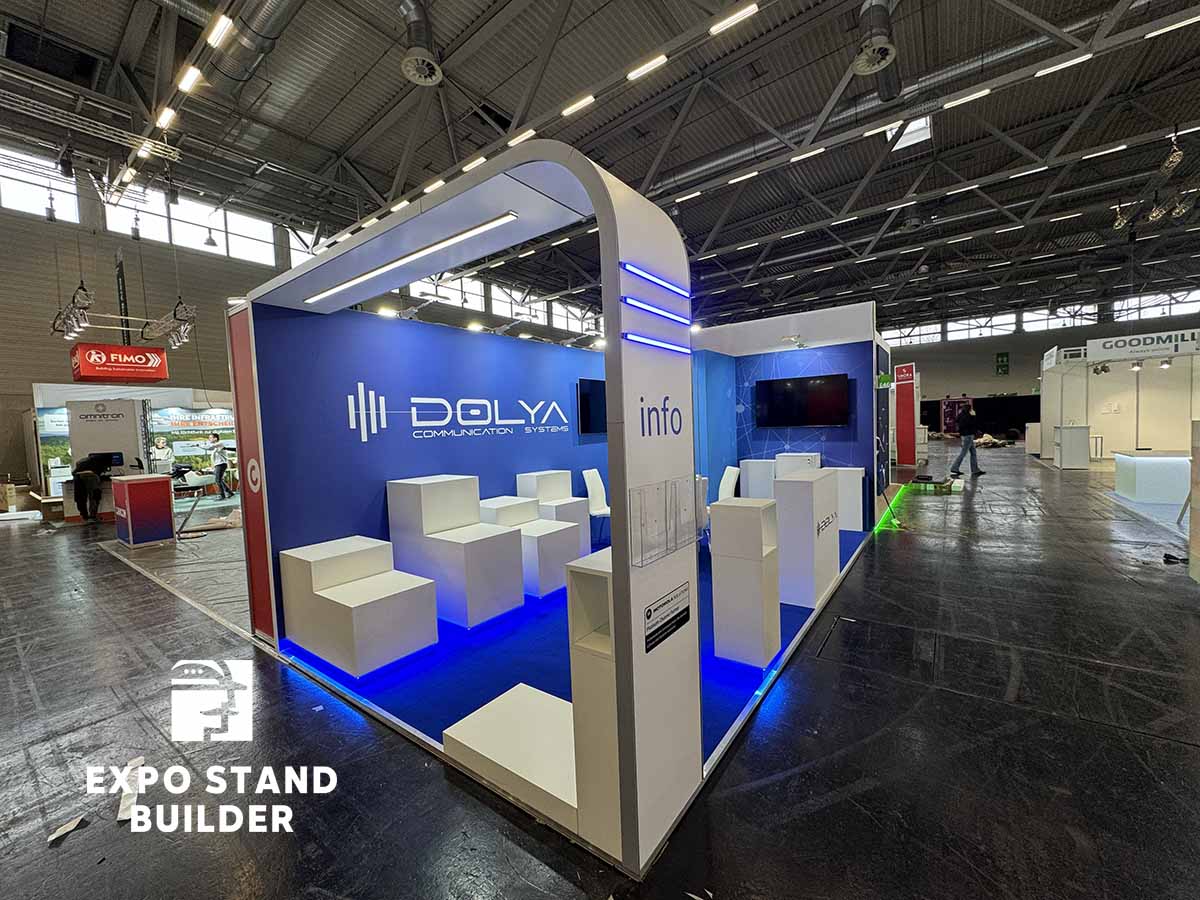
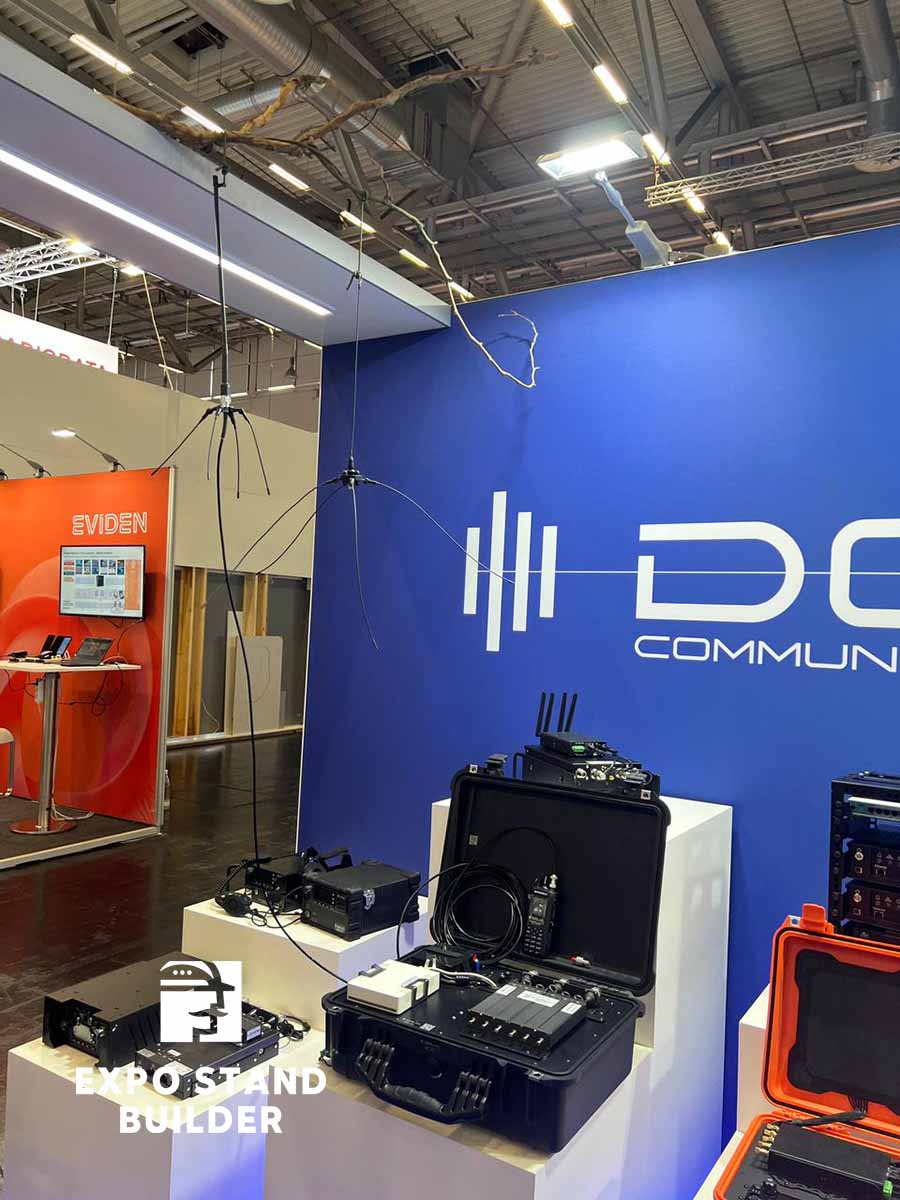
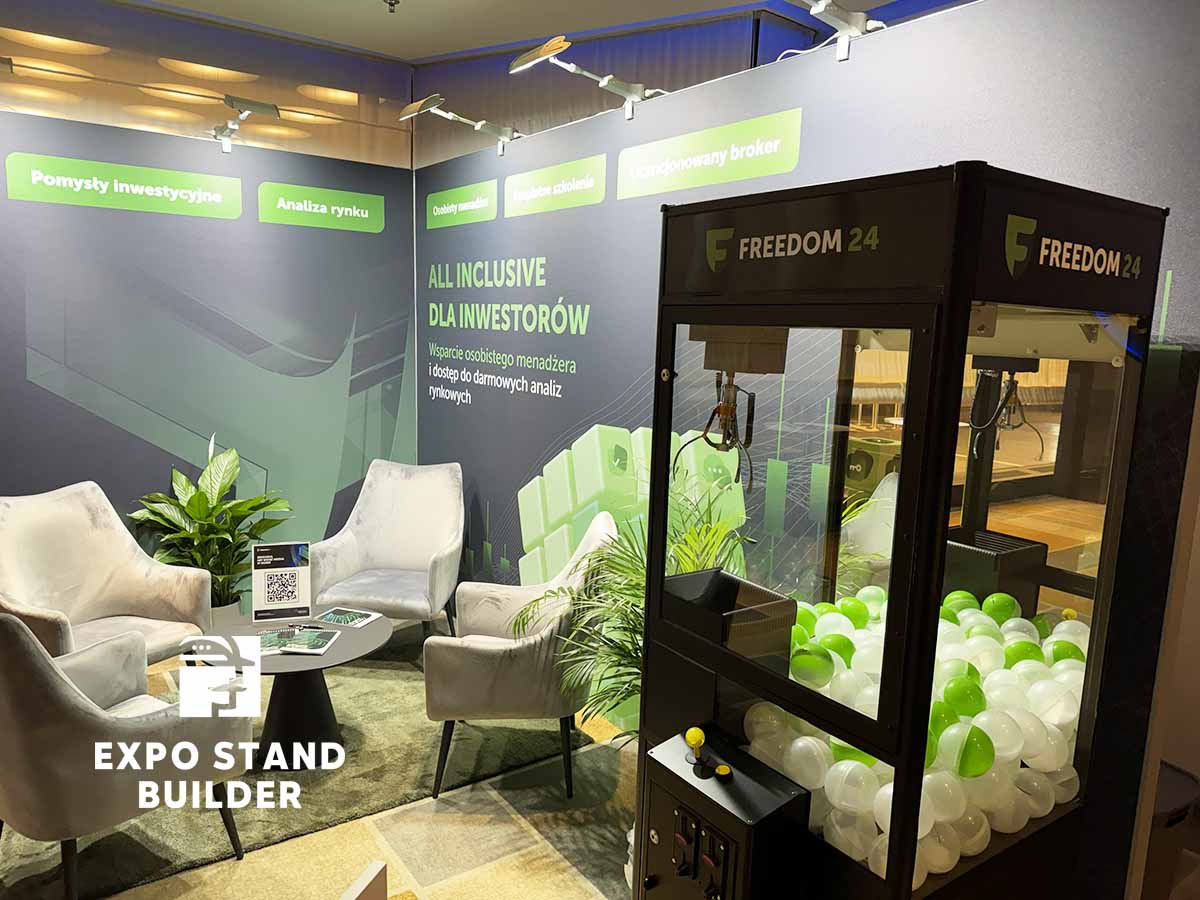
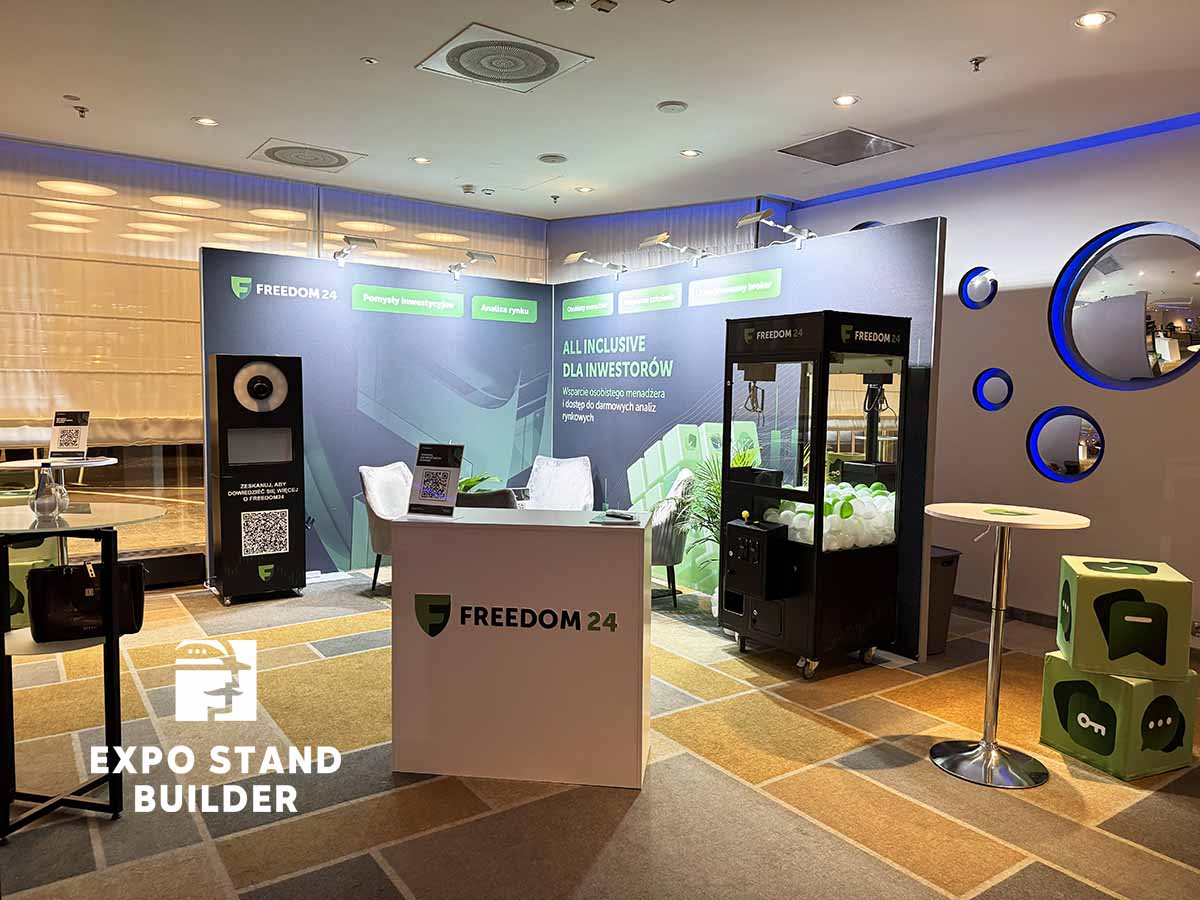
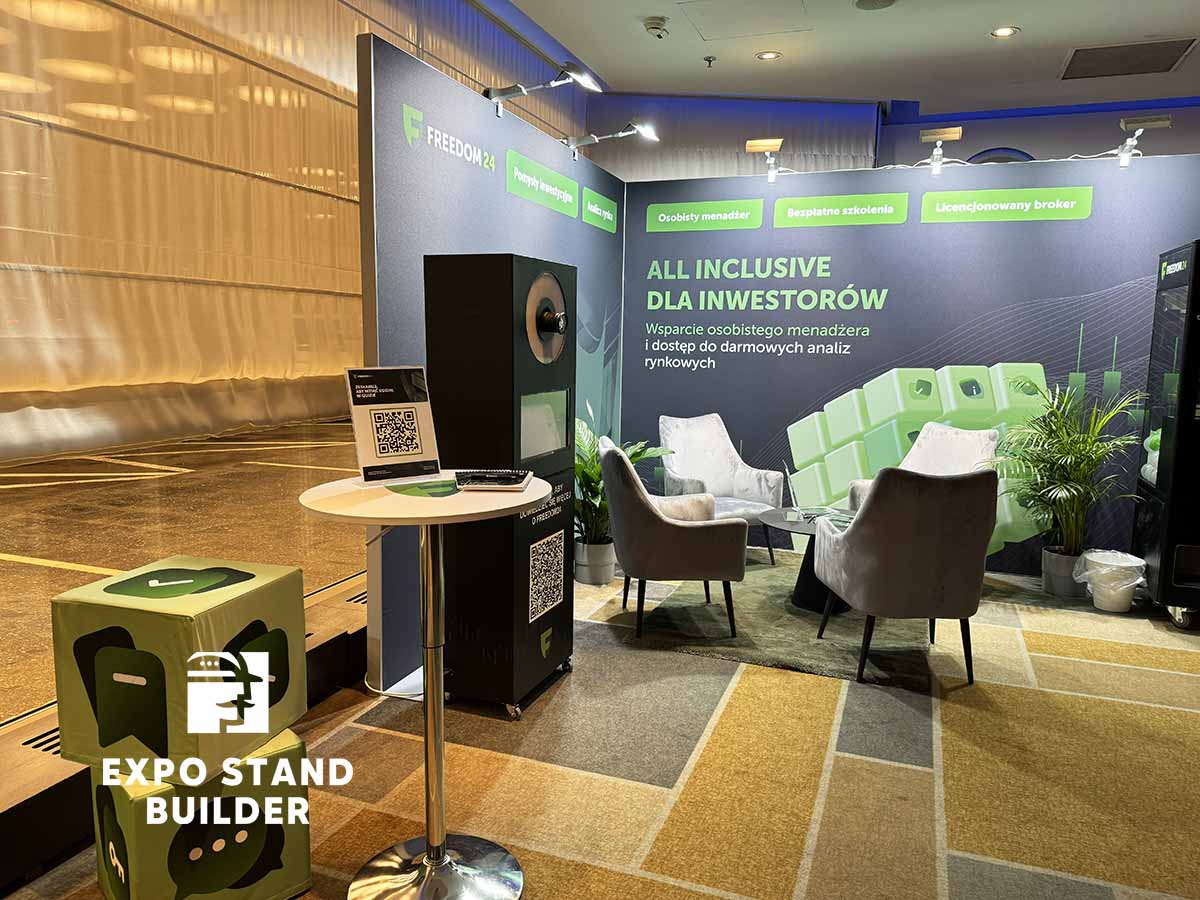
Stand Builder case (technology brand):
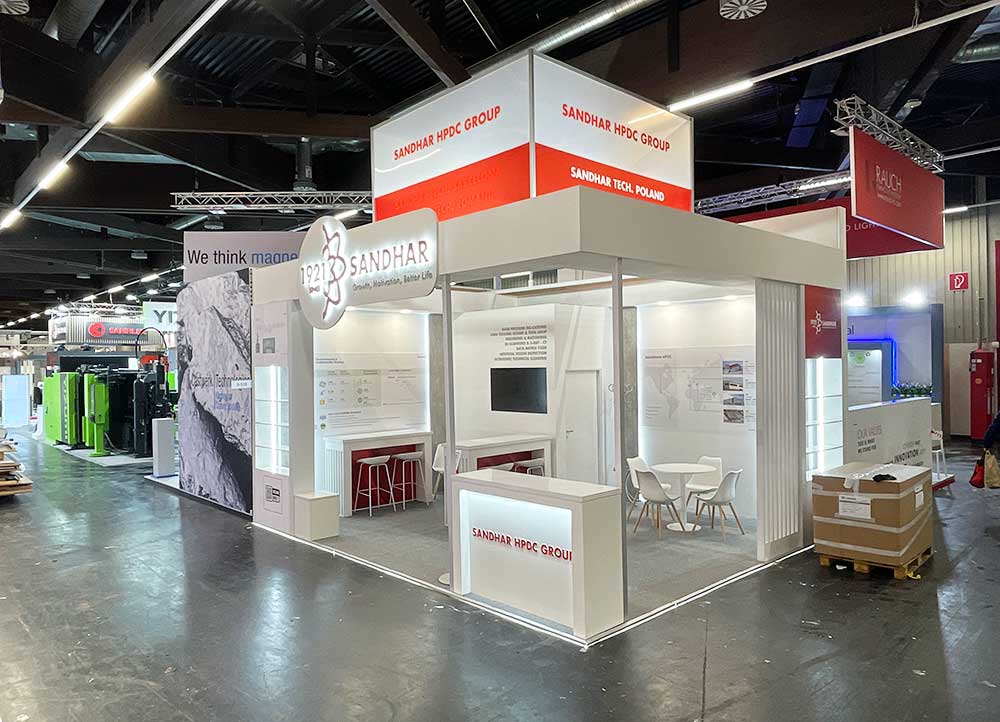
For a tech company in a limited square feet inline booth, we designed a minimal trade show booth design around one promise: “See it working. No slides.”
The booth delivered exactly that. Demo slots filled before day one ended.
18 m² | Cologne | Germany



On-site booth behavior and live lead capture
This is where a trade show marketing strategy either converts or collapses.
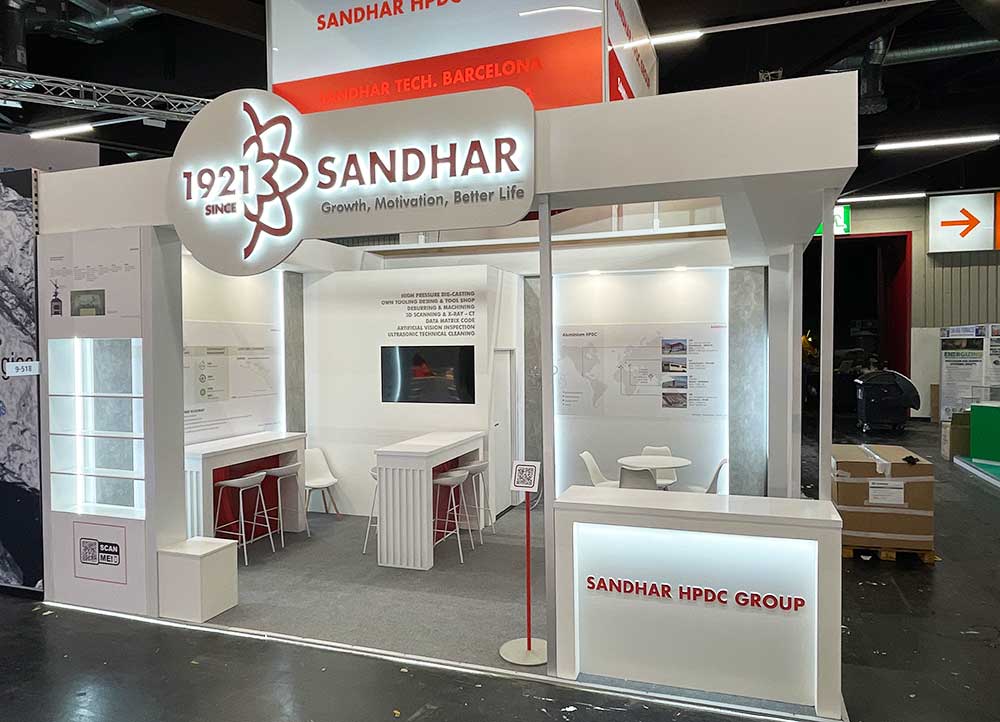
In one custom exhibit booth, we removed tables near the aisle entirely. Tables slow conversations. Instead, we created a quiet pause zone inside the stand, where demos naturally ended and leads were logged immediately.
Follow-ups became specific instead of generic.
12 m² | Warsaw | Poland


Post-show follow-up that respects context
Most exhibition marketing fails after the event.
Salesforce data shows that leads contacted within five days are nine times more likely to convert.
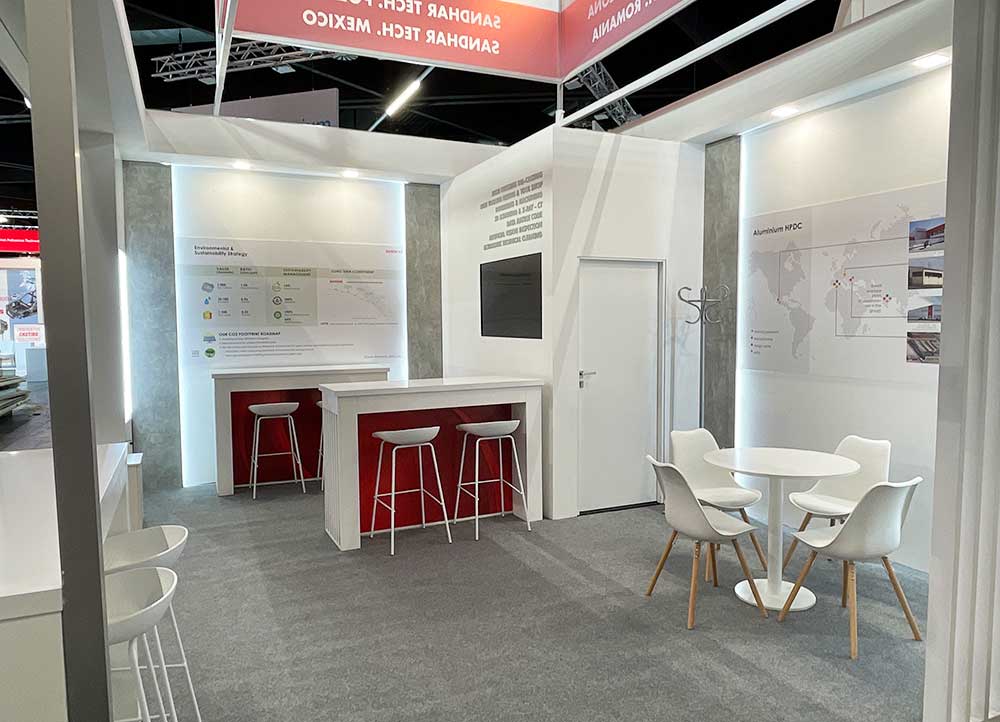
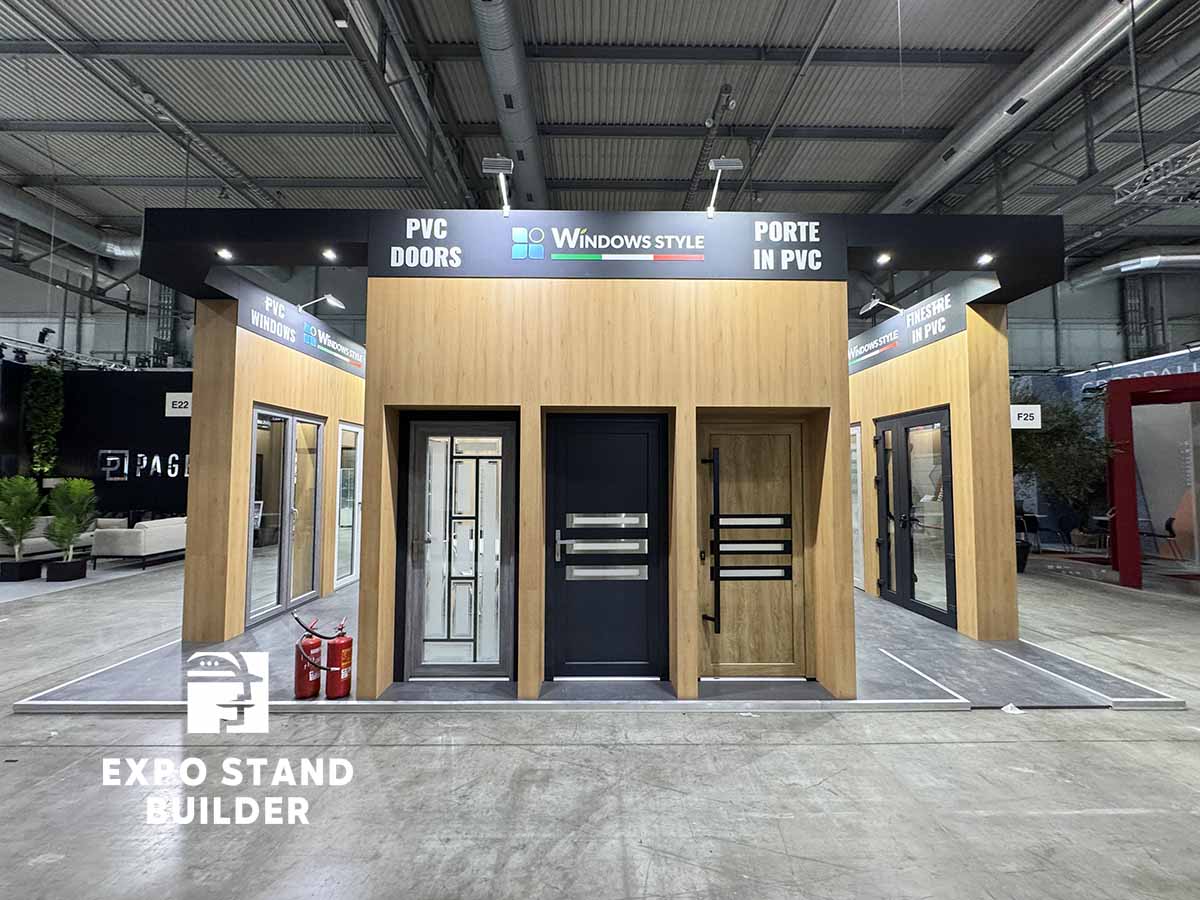
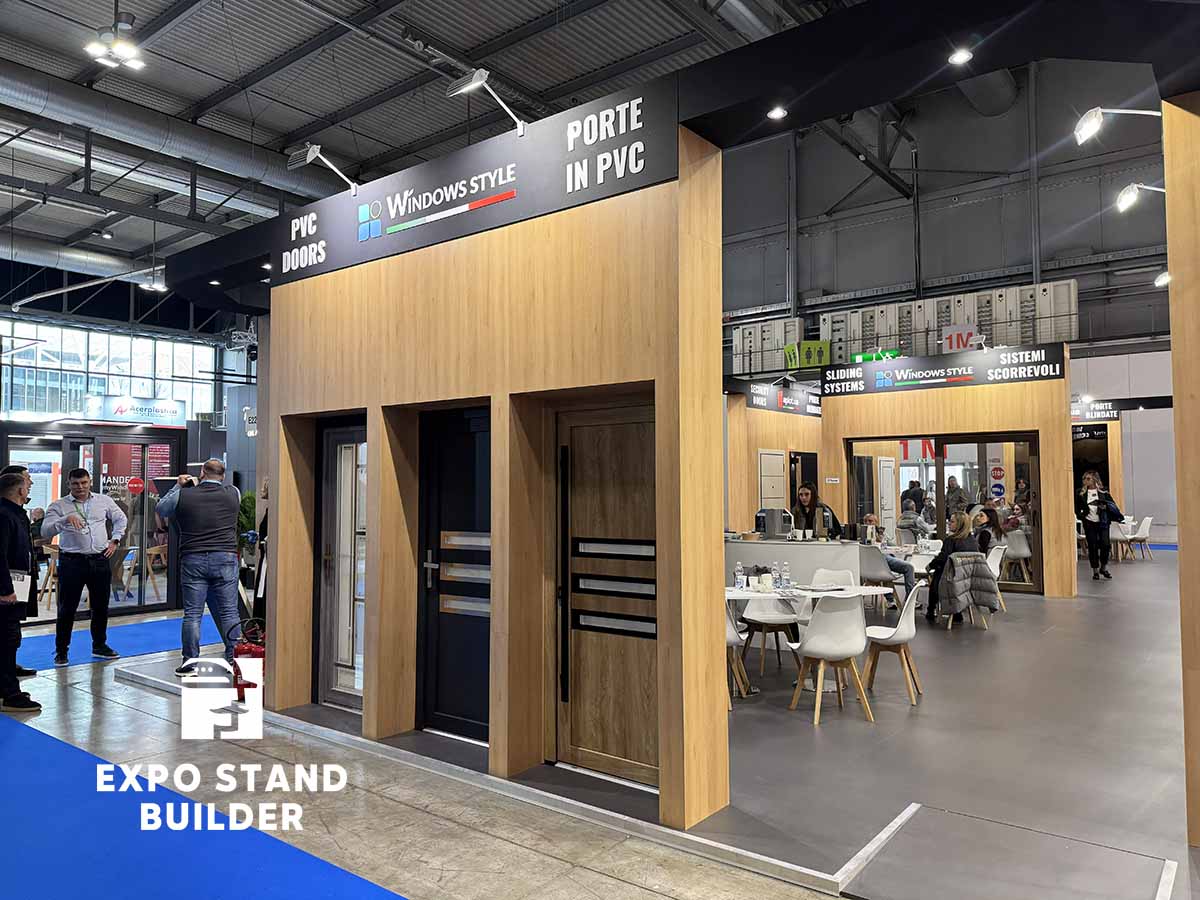
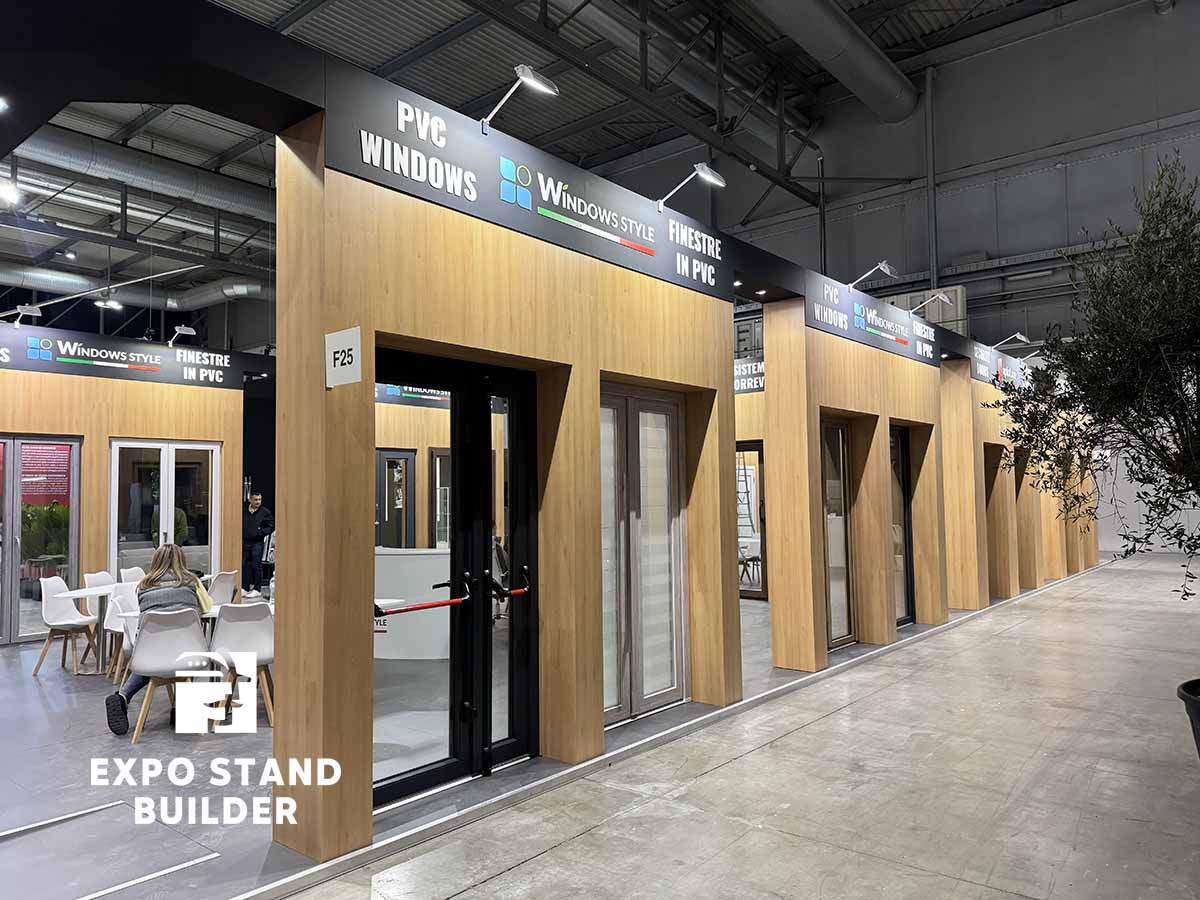
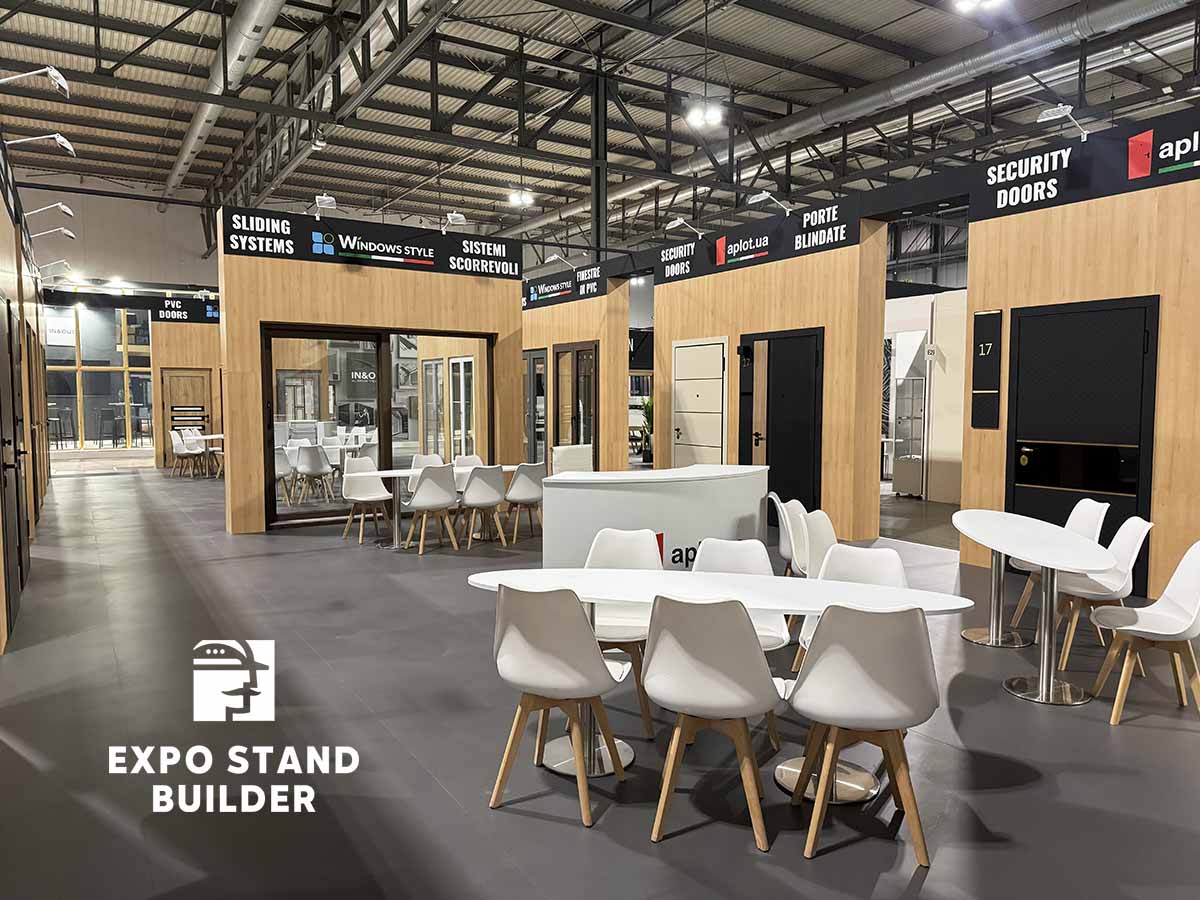
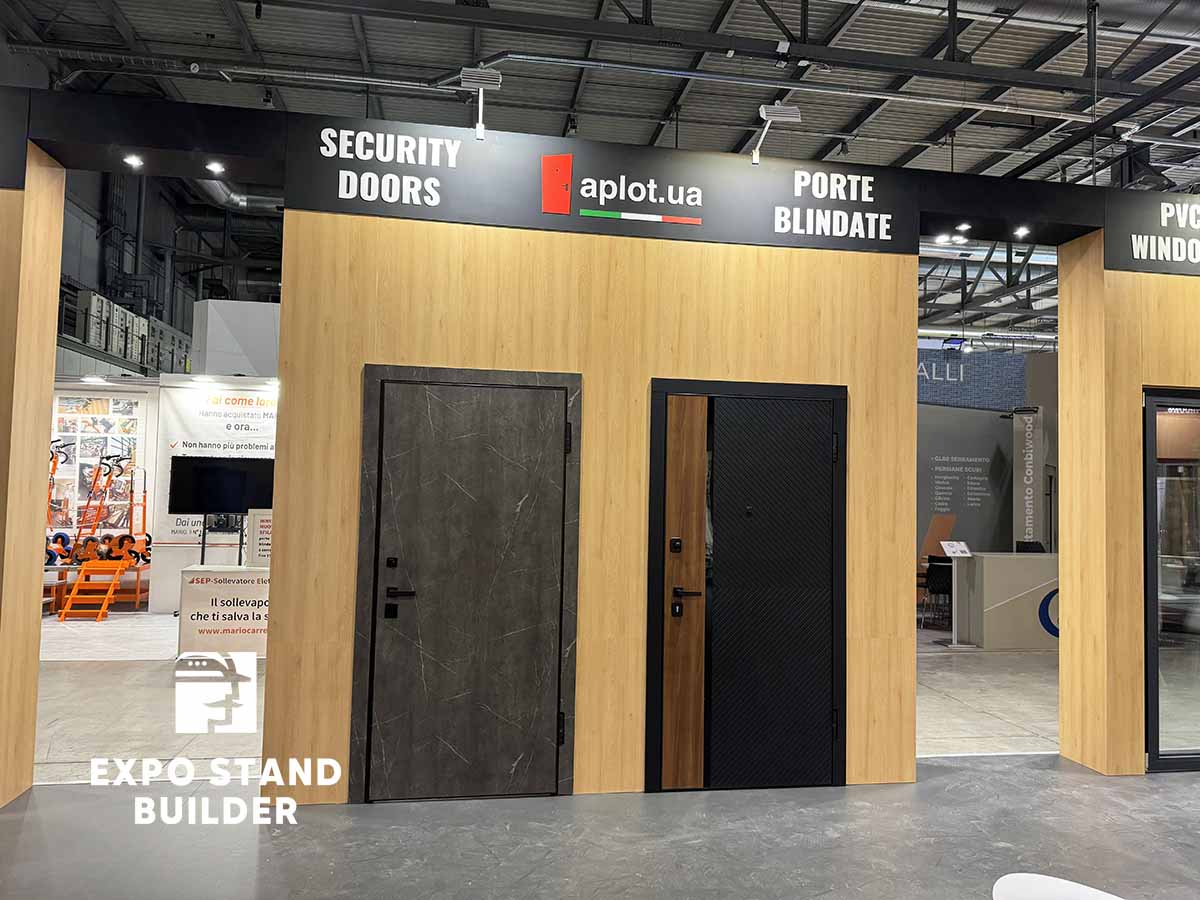
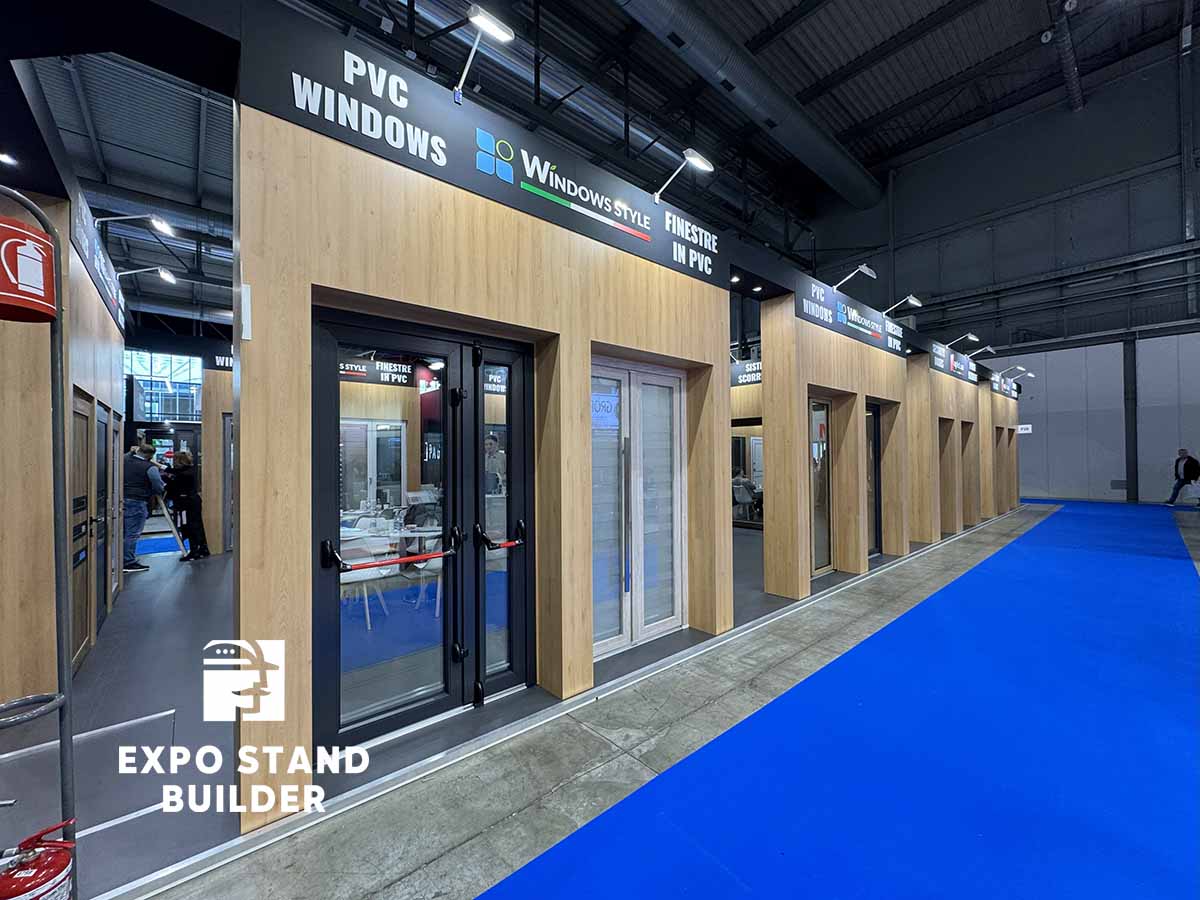
Builder case (B2B goods & services):
Each demo point on the stand had an identifier. Leads were tagged by discussion topic. Follow-up emails referenced the actual conversation, not just the event name. Response rates increased noticeably.
160 m² | Milan | Italy
Digital channels that strengthen exhibition marketing
Offline conversations last longer when supported digitally.
Email and LinkedIn in B2B trade show marketing
For b2b trade show marketing, email and LinkedIn remain the most reliable tools:
- meeting confirmations
- post-event follow-ups
- targeted re-engagement
They extend conversations beyond the event floor.
Paid media and remarketing around exhibitions
Paid campaigns work best when limited to:
- attendees
- visiting companies
- post-show remarketing
That’s where exhibition marketing and digital marketing strategy reinforce each other.
Trade show marketing for small businesses vs. enterprises: two very different games
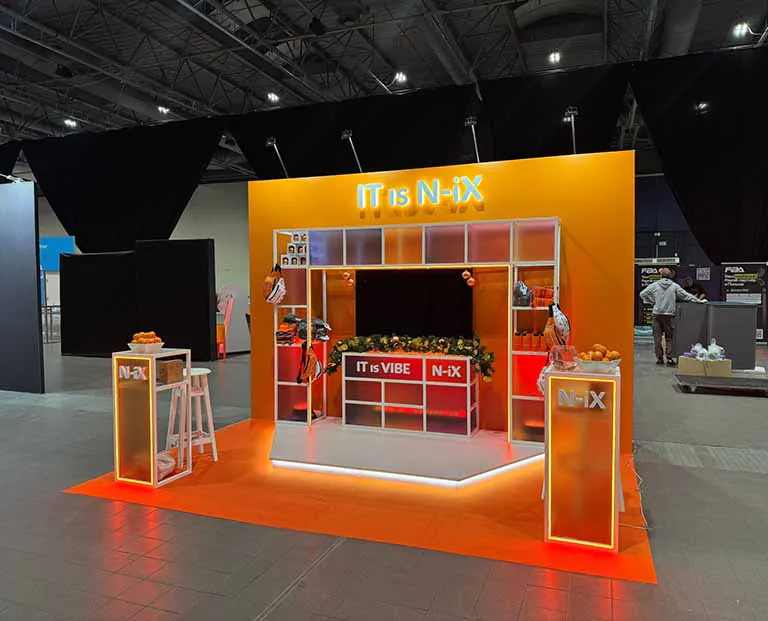
In reality, trade show marketing is significantly different for a small business than it is for a big brand. Smaller teams normally need exhibitions to start talks and find short-term opportunities, not long-term brand signals. For them, compact booths, modular display solutions, and reusable kits often make more sense than large custom builds. The focus is on clarity, speed, and follow-up discipline—exhibitions are one of the best places for a small team to meet decision-makers face-to-face without massive advertising budgets.
Enterprise brands, on the other hand, play a longer game. Their trade show marketing plan usually includes a big presence, several meeting areas, and layered messaging that is backed up by social media and larger campaigns. The goal isn’t only to get a lot of leads; it’s also to position your business in the market and have an impact on individual accounts. What works for one size of company rarely translates directly to the other—and understanding that difference is one of the most important marketing ideas behind choosing the right booth format, team structure, and investment level.
So, what is trade show marketing when it truly works?
It’s not the booth. It’s not the budget. It’s the alignment between space, people, and process. Companies that plan exhibitions as sales systems leave with a pipeline. Others leave with photos and unanswered follow-ups.
After years of building stands and watching real behavior unfold, the pattern is clear: results don’t come from being present—they come from being intentional.