



Imagine walking into a busy exhibition hall.
Within minutes you’ve passed hundreds of booths, LED screens, banners, product displays, and sales teams. Eventually they all blur together into one continuous stream of colors, logos, and messages.
Then something interrupts the pattern.
Perhaps someone greets you with genuine enthusiasm. Perhaps a live demonstration catches your eye. Or perhaps one booth simply looks impossible to ignore.
That single moment is often what people remember long after the exhibition ends.
A trade show is surprisingly similar to scrolling through social media. You keep moving until something stops your thumb. On the exhibition floor, your trade show booth design performs exactly the same job.
Your booth is not decoration. It is a business tool designed to interrupt attention, communicate value within seconds, and start conversations that eventually become sales.
An effective trade show exhibit design begins long before construction starts. Every successful trade show booth design should align with business objectives, visitor expectations, and exhibition logistics.According to CEIR research, most exhibitors identify lead generation, brand awareness, and relationship building as their primary exhibition objectives.
This guide explains how to design a trade show booth from the perspective of the people who actually build them. We’ll walk through every major decision—from booth structure and layout to graphics, lighting, and visitor flow—so you understand how successful booths are planned long before the exhibition doors open.
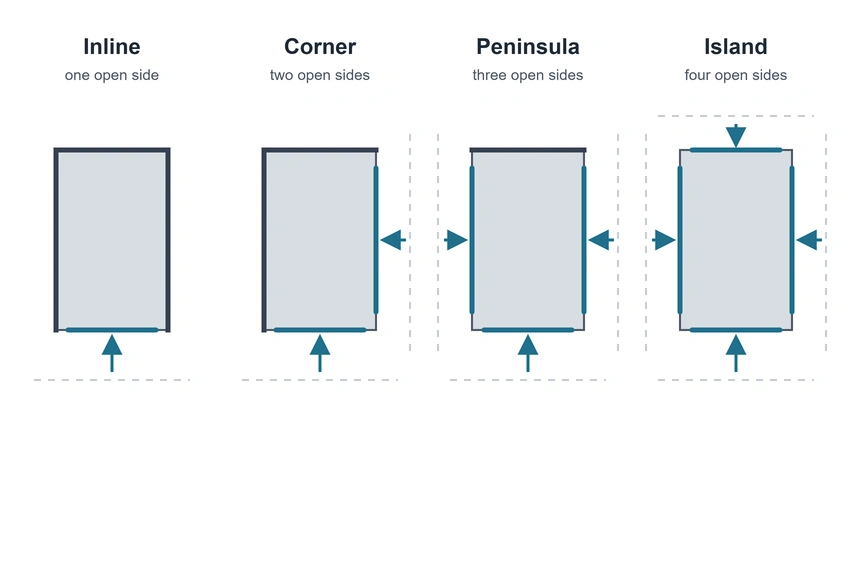
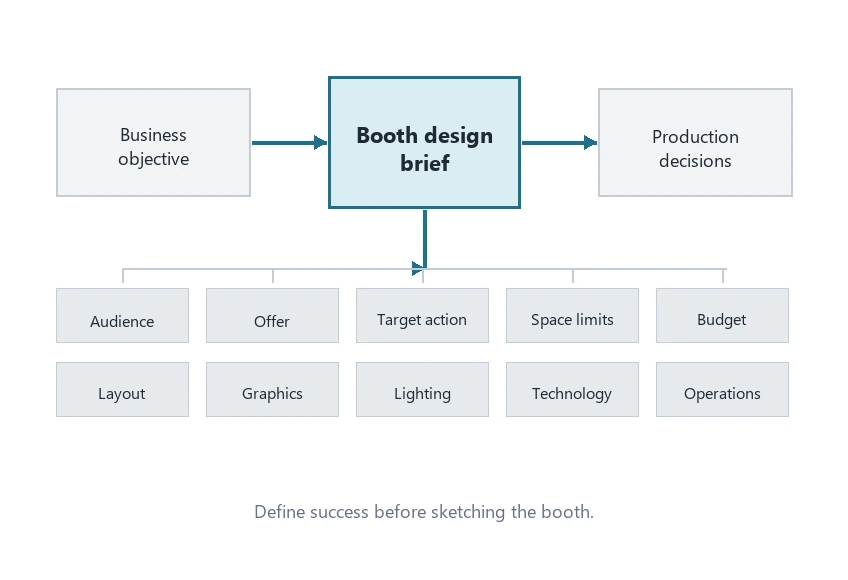
As you compare trade show booth design tips, keep one principle in mind: designing a trade show booth is less about choosing a style and more about making decisions in the right order. A strong concept usually starts with a clear booth design brief that defines the audience, the offer, the visitor action you want, and the practical limits of the exhibition space.
Start with the Goal, Not the Stand
One of the most common mistakes exhibitors make is thinking about the booth before thinking about the business objective.
Questions like:
- “Should we build a two-story stand?”
- “Do we need a large LED wall?”
- “Would an island booth attract more visitors?”
These all sound important—but they’re secondary.The first question should always be much simpler:
What do you expect this exhibition to achieve?
Define Success Before You Design
Different objectives require completely different booth designs.
- A company launching a new product needs an environment built around demonstrations and visibility.
- A manufacturer selling high-value industrial equipment needs space for meetings, technical discussions, and qualified conversations.
- A lifestyle brand may focus on creating memorable visitor experiences that generate social media exposure.
- A startup often needs maximum visibility with a limited budget, while an established international company may prioritize strengthening its market position and reassuring existing clients.
Different Goals Require Different Booths
Every design decision should support that primary objective.When companies skip this step, the result is often a visually impressive booth that doesn’t perform commercially.
We’ve seen exhibition spaces filled with expensive screens that nobody watched, oversized meeting areas that remained empty, and beautiful open concepts where visitors had nowhere to stop and engage.
Good booth design is never about adding more elements.It’s about ensuring every square meter has a purpose.
Before sketching the first concept, define exactly what success looks like. Once the objective is clear, decisions about layout, graphics, technology, visitor flow, and investment become significantly easier.
Understand How Visitors Actually Behave
Many exhibitors assume visitors explore an exhibition systematically, carefully comparing every company before making decisions.
In reality, that’s almost never what happens.Most people spend hours walking through enormous exhibition halls. By the time they’ve passed dozens—or even hundreds—of booths, their attention is overloaded. Logos blend together. Marketing messages sound the same. Even impressive displays begin to lose their impact.
Why Visitors Stop Walking
Psychologists call this attention fatigue.The human brain starts filtering out anything that feels familiar so it can conserve mental energy.
That’s why your booth doesn’t need to compete with one neighboring stand.It competes with everything visitors have already seen that day.
The Three Questions Every Booth Must Answer
The first few seconds are critical.
A visitor should be able to answer three questions almost instantly:
- What does this company do?
- Is it relevant to me?
- Is there a reason to stop?
If any of those answers are unclear, people usually keep walking.
This is why successful trade show booth design is based on clarity before creativity.
A clean message will almost always outperform a complicated concept.Visitors shouldn’t have to decode your brand story.They should understand your value before they even step onto the stand.
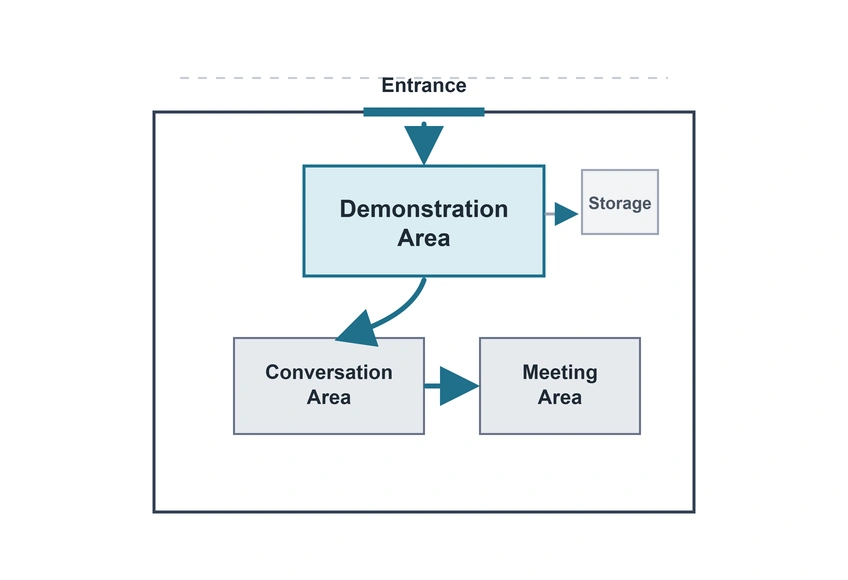
Once you’ve captured their attention, your booth should naturally guide them deeper into the experience—toward a product demonstration, a conversation, or a meeting area.
The best exhibition booths don’t force interaction.They make the next step feel obvious.
Design for People, Not for Floor Plans
It’s surprisingly easy to create a booth that looks spectacular on a 3D rendering but feels uncomfortable the moment visitors step inside.That’s because software doesn’t simulate human behavior.
Think About Visitor Flow
People don’t move through exhibition spaces like perfectly organized arrows. They hesitate, change direction, stop unexpectedly, gather in small groups, avoid crowds, and instinctively choose the easiest path.
A successful exhibition booth design accounts for those natural behaviors from the very beginning.
Visitors should never wonder where they’re supposed to go.The entrance needs to feel open and inviting. The first interaction should happen naturally rather than forcing people to commit by walking deep into the stand. Demonstration areas should attract attention without blocking circulation, while meeting spaces should provide enough privacy for meaningful business conversations.
A practical trade show booth layout should also respect trade show booth dimensions before anyone chooses finishes or furniture. The same reception counter, demo table, storage wall, or meeting pod can feel generous in an island stand and restrictive in a compact inline space, so the exhibit design process has to connect dimensions, circulation, and trade show booth elements from the start.
Avoid the “Packed Store” Effect
One common mistake is trying to fit too much into too little space.
A booth overloaded with displays, furniture, storage rooms, counters, and promotional materials often creates the opposite effect of what was intended. Instead of looking impressive, it feels crowded and difficult to navigate.
Imagine entering a small shop where every aisle is packed with merchandise from floor to ceiling.You don’t feel inspired to browse.You just want to get out.
The same thing happens at exhibitions.
Every additional element competes for attention. Every unnecessary obstacle interrupts visitor flow.Good design isn’t about filling every available square meter.
It’s about giving visitors enough space to feel comfortable, explore naturally, and start conversations without feeling trapped.
The most effective booths rarely feel busy—even when they’re full of people. They feel organized, intuitive, and easy to experience. That’s exactly the environment where meaningful business conversations begin.
Make Your Message Visible in Seconds
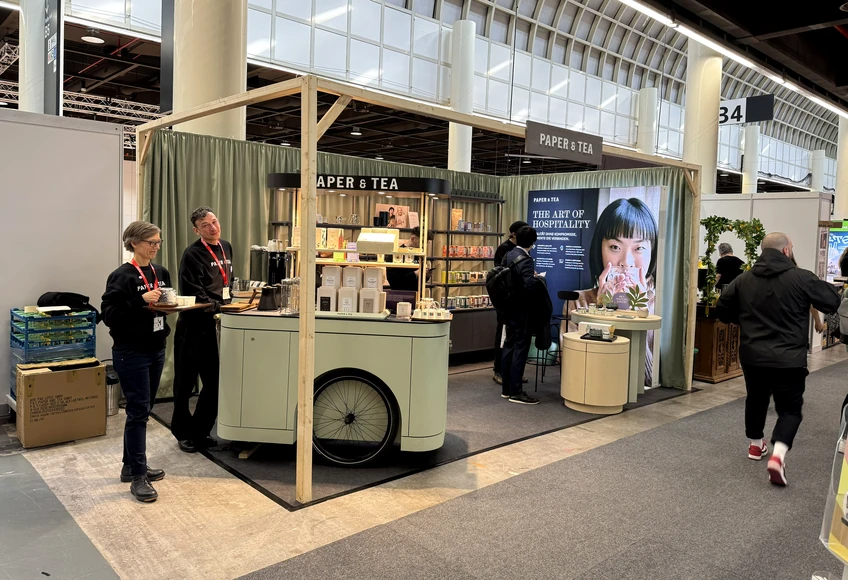
Many exhibitors treat trade show booth graphic design as the final step in the project. In reality, it is one of the first things visitors notice.People don’t stop because they recognize your logo.They stop because they immediately understand what you offer and why it matters to them.
At a busy exhibition, you have only a few seconds to communicate that message.If you’ve ever wondered how to make a trade show booth stand out, the answer is rarely a bigger budget. It’s a clearer message delivered faster than your competitors.
Your company name should be visible from a distance. Your value proposition should be readable at a glance. Images should support the message rather than compete with it. Clear booth signage design helps visitors understand your offer before they even speak to your team.
If visitors need to read several paragraphs or decipher a clever slogan, you’ve already lost their attention. Strong booth graphics follow a simple principle: Less information. More clarity.
One of the biggest investments in trade show booth backdrop design should always be the back wall, because it remains visible even when the booth becomes crowded.Everything else is secondary.
This is where trade show booth branding needs discipline. Trade show booth materials, color, scale, and message hierarchy should work together, whether the stand uses rigid panels, a tension fabric display, backlit graphics, or modular wall systems. The goal is not to cover every surface with information; it is to make the brand recognizable before the visitor reaches the aisle edge.
Your Booth Isn’t a Brochure
Many companies make the opposite mistake. They try to fit an entire brochure onto the booth walls—long lists of services, detailed product descriptions, technical specifications, multiple marketing claims, partner logos, QR codes, awards, certifications, and promotional banners.
The result often resembles a crowded bulletin board rather than a professional exhibition stand.Visitors don’t read walls.They scan.If something captures their interest, then they start asking questions.Your graphics should spark curiosity—not replace the sales conversation.
Think of your booth as the cover of a book, not the entire book itself.Its purpose is to make people want to discover what’s inside.
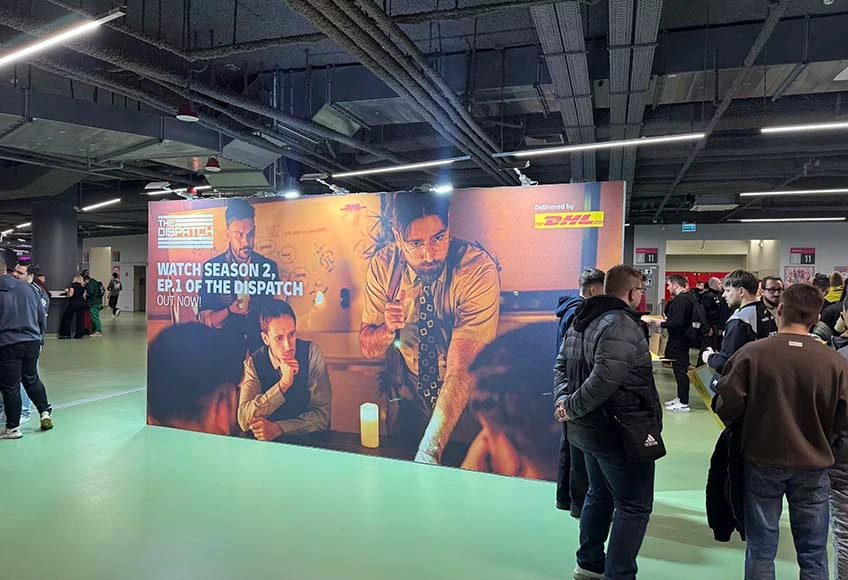
Lighting Shapes Attention More Than Decoration
Lighting is often treated as a finishing touch—something to think about after the walls, graphics, and furniture are in place.
Create Visual Hierarchy with Light
In reality, it’s one of the most powerful design tools you have.The right lighting doesn’t simply make a booth brighter.It tells visitors where to look.
It highlights products, creates depth, separates functional areas, and influences the overall atmosphere of the space. Even a relatively simple stand can feel premium when the lighting is thoughtfully designed.
The opposite is equally true.Poor lighting can make an expensive booth feel flat, lifeless, and forgettable.A common mistake is relying on the exhibition hall’s general lighting.
Don’t Rely on Hall Lighting
Those ceiling fixtures are designed to illuminate the venue—not to showcase your brand. Products lose definition, graphics appear dull, and important architectural features blend into the background.
Strategic lighting creates hierarchy.Accent lights draw attention to key products.
Warm lighting makes meeting areas feel more welcoming.Integrated LED elements add depth without overwhelming the design.Backlit graphics increase visibility from across the hall.
Useful trade show booth lighting ideas usually begin with function: what should visitors notice first, where should products look strongest, and which zones need a calmer atmosphere for conversation? Accent lighting, backlit signage, and controlled screen brightness should support that order instead of competing with it.
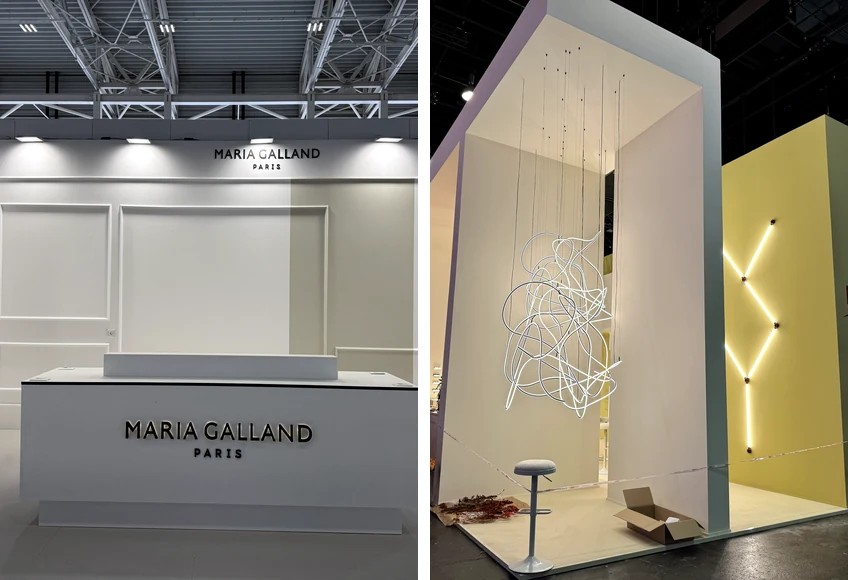
The goal isn’t to create a theatrical light show.It’s to help visitors notice the right things in the right order.Good lighting supports the story your booth is trying to tell.
When it’s done well, most visitors won’t consciously notice it.
They’ll simply feel that your stand looks more professional, more inviting, and somehow easier to engage with than the dozens of others around it.
Technology Should Support the Conversation—Not Replace It
Interactive screens, touch displays, LED walls, augmented reality, and immersive presentations have become common features at modern exhibitions.
Used well, they can strengthen your message and help visitors understand complex products more quickly.
Used poorly, they become expensive distractions.Technology should never be installed simply because it’s available.Every digital element needs a clear business purpose.
Ask yourself a simple question:
Will this help visitors understand our solution, or will it compete for their attention?
Technology Needs a Business Purpose
A large LED wall can be an excellent way to demonstrate industrial machinery that can’t be transported to the exhibition. Interactive product configurators can simplify complex purchasing decisions. Digital presentations can explain technical processes that would otherwise take several minutes to describe.
An led display booth or interactive trade show booth works best when the screen has a job beyond movement and brightness. It should reveal something visitors cannot understand from a static wall alone, then give the team a natural opening for a product explanation or qualified sales conversation.
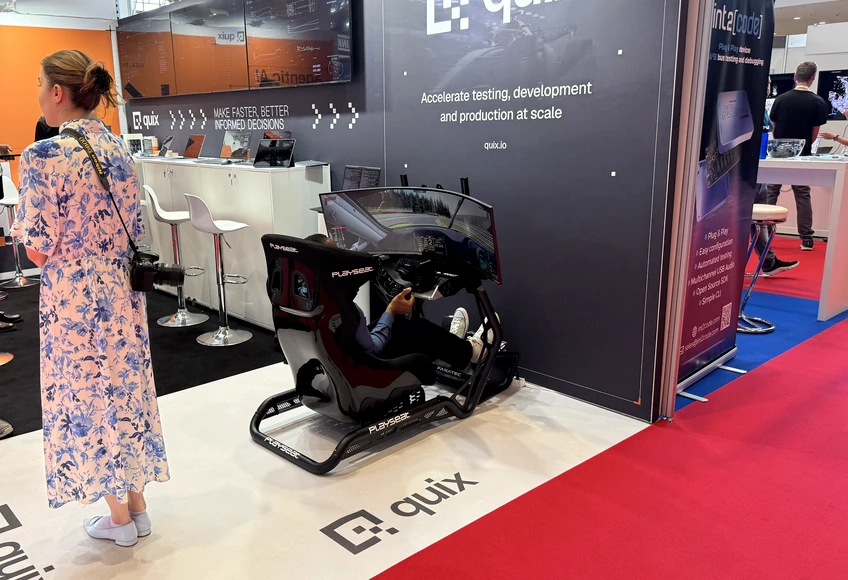
But endless promotional videos playing on a loop rarely create meaningful engagement.
Don’t Let Screens Replace People
Visitors don’t come to an exhibition to watch television.They come to meet people, ask questions, compare suppliers, and solve business problems.
Technology should make those conversations easier—not replace them.The same principle applies to every interactive feature.
If visitors need instructions before they can use it, it’s probably too complicated.If your sales team spends more time explaining the technology than discussing your products, something has gone wrong.
The best digital experiences feel almost invisible.They provide information exactly when it’s needed, encourage interaction, and naturally lead into a conversation with your team.
At the end of the day, people remember the quality of the conversation far longer than the size of the screen.
Give Your Team a Booth They Can Actually Work In
Even the most impressive trade show booth design can fail if the people working inside it struggle to do their jobs.
This is one of the most overlooked parts of exhibition planning.
Companies spend weeks discussing architecture, graphics, and technology, yet give surprisingly little thought to how the booth will function during four or five intense exhibition days.
Your Booth Is Also a Workplace
Your stand isn’t just something visitors look at.For your team, it becomes a temporary workplace.That workplace needs to support dozens of small but essential tasks.
- Where will personal belongings be stored?
- Where can staff prepare coffee or refreshments?
- Is there a secure place for laptops, brochures, and personal items?
- Can batteries be charged without cables running across the floor?
- Will employees have somewhere to take a short break between meetings?
These details rarely appear in glamorous 3D visualizations.They become painfully obvious on the first morning of the exhibition.
We’ve seen beautifully designed booths where sales representatives had nowhere to keep their jackets, brochures were stacked under reception counters, and staff were forced to eat lunch in full view of visitors because no service area had been planned.
Plan Operational Details in Advance
Small operational problems accumulate quickly.They create stress for the team, reduce professionalism, and ultimately affect the visitor experience.A well-designed booth works for two audiences at the same time.Visitors should enjoy a seamless experience.
Your team should be able to work efficiently without constantly improvising solutions.
When both needs are considered from the start, the booth performs better throughout the entire exhibition—not just during the first impression.
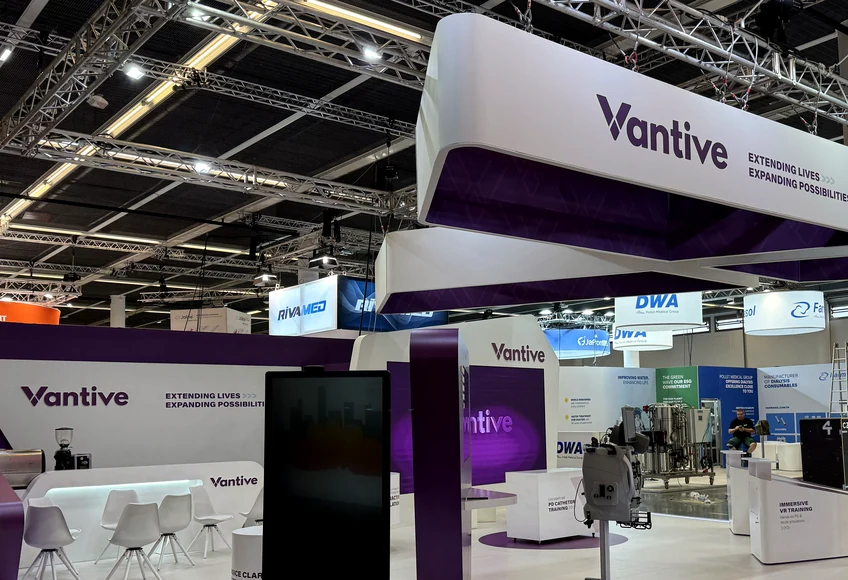
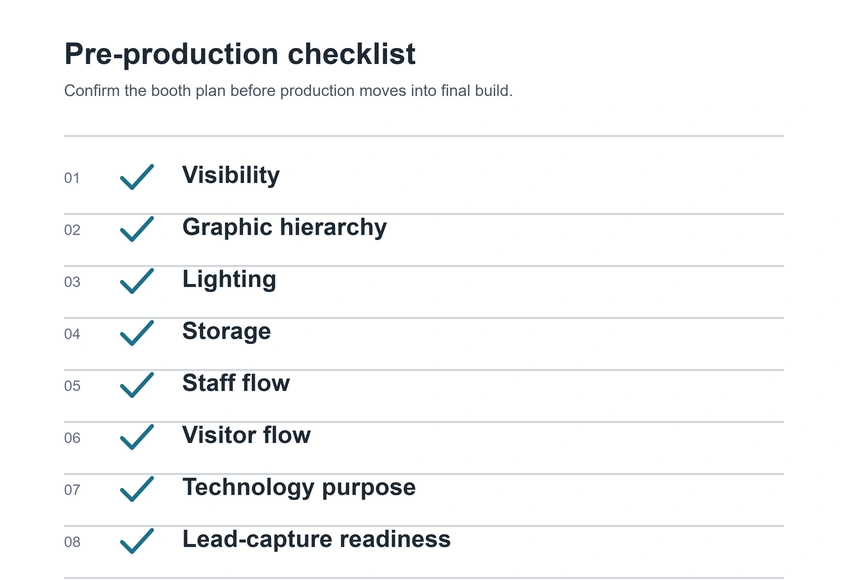
Practical trade show booth setup tips belong in the design discussion, not only in the installation schedule. Storage access, cable paths, service counters, staff movement, and lead-capture points should be checked before production, because small operational details often decide whether the stand feels professional during the busiest hours of the show.
Balance Ambition with Budget
One of the biggest misconceptions in exhibition marketing is that a larger budget automatically leads to better results.
It doesn’t.A bigger budget gives you more options—but not necessarily better decisions.For companies attending multiple exhibitions each year, modular booth design often provides the best balance between flexibility and long-term cost efficiency.
Spend Where Visitors Notice
Some of the most successful exhibition booths we’ve built were relatively modest in size. In many cases, a simple trade show booth design delivers better commercial results than an oversized stand filled with unnecessary features.They succeeded because every design choice supported a clear commercial objective.
At the same time, we’ve seen large, expensive stands fail to generate meaningful business simply because the investment was focused on appearance rather than performance.
The key is understanding where your budget creates the greatest impact.
For example, increasing the booth size may be worthwhile if you regularly host private meetings or demonstrate large equipment.
Think Beyond Construction Costs
Investing in premium graphics and professional lighting often delivers a stronger return than adding decorative architectural elements that visitors barely notice.Likewise, spending more on visitor experience can be far more valuable than spending more on visual complexity.
A practical budget should always include more than construction costs.
Consider logistics, transportation, installation, dismantling, furniture, AV equipment, utilities, storage, graphics, and any future reuse of the stand.A booth designed for multiple exhibitions may require a higher initial investment, but it can significantly reduce costs over the next several years.
The smartest exhibitors don’t ask:
“How can we build the biggest booth?”
They ask:
“How can every euro we spend generate more conversations, better leads, and stronger business opportunities?”
That shift in thinking usually leads to much better investment decisions.
A realistic trade show booth checklist should connect budget with purpose: which elements must be custom, which can be modular, which materials need premium finishing, and which details can be simplified without reducing visitor confidence. This keeps the investment focused on the parts of the stand that people actually see, touch, and remember.
Common Trade Show Booth Design Mistakes
Most exhibition mistakes aren’t caused by poor construction.They’re made long before production begins.A weak strategy usually can’t be fixed with better graphics, additional screens, or a larger budget.
Here are some of the problems we see most often.
Designing for the Boardroom Instead of the Exhibition Floor
Many booth concepts are approved in meeting rooms by people who won’t spend five days talking to visitors.
The design looks impressive during a presentation, but once it’s built, sales teams quickly discover that it doesn’t support real conversations.
Always evaluate a concept from the visitor’s perspective—not just from a rendered image.
Trying to Say Everything at Once
Some exhibitors attempt to communicate every product, every service, every achievement, and every marketing message on one stand.
The result is information overload.
If everything is important, nothing stands out.
Choose one primary message and let everything else support it.
Ignoring Visitor Flow
Beautiful architecture can’t compensate for poor circulation.
If people hesitate at the entrance, block each other around demonstrations, or interrupt private meetings simply because there isn’t enough space, the layout is working against you.
Following Trends Without a Reason
Minimalism.LED tunnels.Immersive experiences.Artificial intelligence.
Every year brings new exhibition trends.
Not every trend belongs in every booth.
Technology and design should support your commercial goals—not become the goal themselves.
Forgetting What Happens After the Exhibition
A successful booth doesn’t end when the exhibition closes.
It should make lead collection easier, support meaningful conversations, and leave visitors with a clear memory of your company.
The real return on investment comes from the relationships you build after the event—not from compliments about the stand itself.
Great Booth Design Starts Long Before Construction
By the time the first wall is assembled inside the exhibition hall, most of the important decisions have already been made.
The success of a booth is determined during planning—not during installation.
If you’re looking for trade show booth design inspiration, don’t start by copying attractive booths. Start by understanding why they work.
The best trade show booth design examples aren’t necessarily the largest or the most expensive. They’re the ones that solve a clear business problem.
The strongest exhibition projects begin with clear business objectives, a realistic budget, a deep understanding of visitor behavior, and a design strategy built around communication rather than decoration.
Everything else follows from those decisions.
- Architecture.
- Graphics.
- Lighting.
- Technology.
- Furniture.
- Visitor flow.
Every element should work together to support one goal: creating meaningful business conversations.That’s what separates an effective trade show booth design from one that simply looks impressive.
A successful trade show booth design doesn’t shout louder than every competitor.
- It communicates more clearly.
- It makes visitors feel comfortable.
- It helps your team work efficiently.
Most importantly, it gives the right people a reason to stop, engage, and remember your company after the exhibition ends.
If you’re planning your next event, don’t start by asking what your booth should look like.
Start by asking what it should achieve.The right design is rarely the most expensive.It’s the one that turns exhibition space into measurable business results.
Ready to Design a Booth That Works?
Every exhibition is different, and every company has different objectives. A booth that performs brilliantly for a technology startup may be completely wrong for an industrial manufacturer or an established global brand.
That’s why successful exhibition stands are never built from templates.
They’re designed around your products, your audience, your sales process, and your business goals.
If you’re looking for trade show booth design inspiration, don’t start by copying attractive booths. Start by understanding why they work.
The best trade show booth design examples aren’t necessarily the largest or the most expensive. They’re the ones that solve a clear business problem.
Ultimately, an effective trade show booth design isn’t defined by its size or budget. It’s defined by how well it helps people remember your company and start meaningful business conversations.
Tell us about your next exhibition, and we’ll help you transform your ideas into a trade show booth designed for real business performance.