



A booth can look impressive during setup and still fail the moment the exhibition opens. The screens are running, the graphics are clean, the products are displayed correctly — yet people walk past without even slowing down.
Usually, the problem is not the budget. It’s friction.
In modern trade shows, attendees process exhibition spaces incredibly fast. If a setup feels confusing, overloaded, or too “sales-heavy,” they move on within seconds. The displays that actually perform in 2026 are the ones that make interaction feel natural from the very first glance.
In this article, I’ll break down practical trade show display ideas that help brands attract attention, improve engagement, and create smoother conversations on the show floor.
What Makes a Trade Show Display Effective
An effective display does more than look attractive in photos. It reduces confusion and helps people immediately understand what deserves their attention.
The strongest trade show display concepts usually combine:
- clear visual hierarchy
- focused messaging
- and intuitive interaction.
In practice, attendees should understand your brand, product category, and value proposition within just a few seconds. Exhibition environments that require too much interpretation rarely perform well in crowded halls.
In many cases, effective booth design is less about adding more elements and more about helping people understand the space instantly.
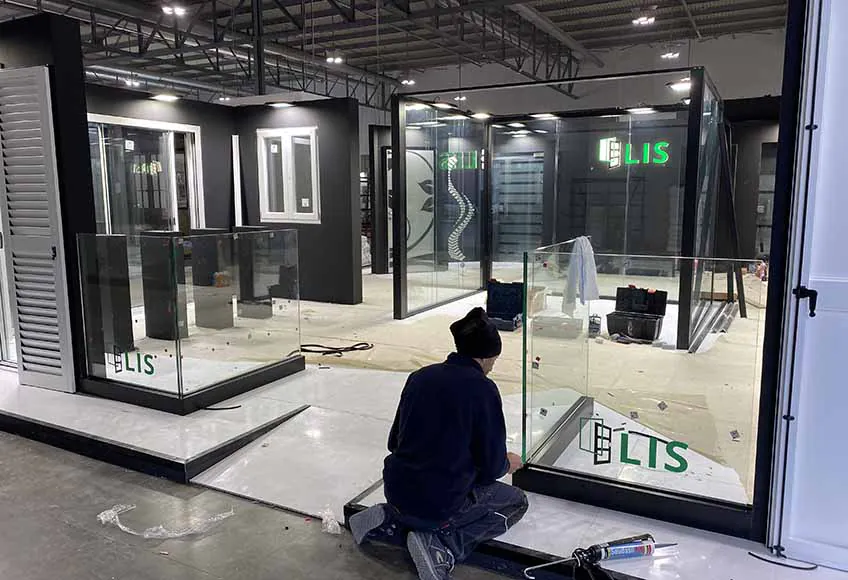
Trade Show Display Ideas by Goal
Different business goals require different display strategies. A setup focused on lead generation should behave very differently from one designed for product launches or social media visibility.
Product-focused displays that simplify decision-making
One of the biggest mistakes exhibitors still make is trying to show everything at once.
Biggest mistake:
Trying to present every product category equally instead of guiding attention toward one clear focal point.
When people see too many products, too many messages, or too many categories, they often stop processing the space altogether. Stronger trade show display ideas simplify decisions instead of increasing complexity.
The most effective product-focused setups tend to rely on:
- one hero product
- a single clear message
- and one obvious interaction point attendees immediately understand.
Focused lighting and vertical presentation also help products stand out naturally without overcrowding the environment.
Brand awareness displays visitors actually remember
Brand-awareness spaces work differently. Their goal is not to explain everything — it’s to stay in people’s minds after the show ends.
Large graphics, recognizable colors, motion elements, and cleaner layouts now perform better than environments overloaded with text. In several recent projects, we combined minimalist structures with subtle projection mapping to create movement without making the space visually exhausting.
At many trade shows, memorability comes more from clarity than complexity.
Lead generation displays that reduce friction
People have become much more selective about who they talk to during exhibitions.
Setups that immediately feel aggressive or overly scripted tend to lose engagement quickly. More effective lead-generation environments lower the barrier to interaction:
- attract attention naturally
- create curiosity
- make participation easy.
QR codes, lightweight demos, and short interactive moments now outperform many traditional lead-capture tactics because they allow passersby to engage at their own pace.
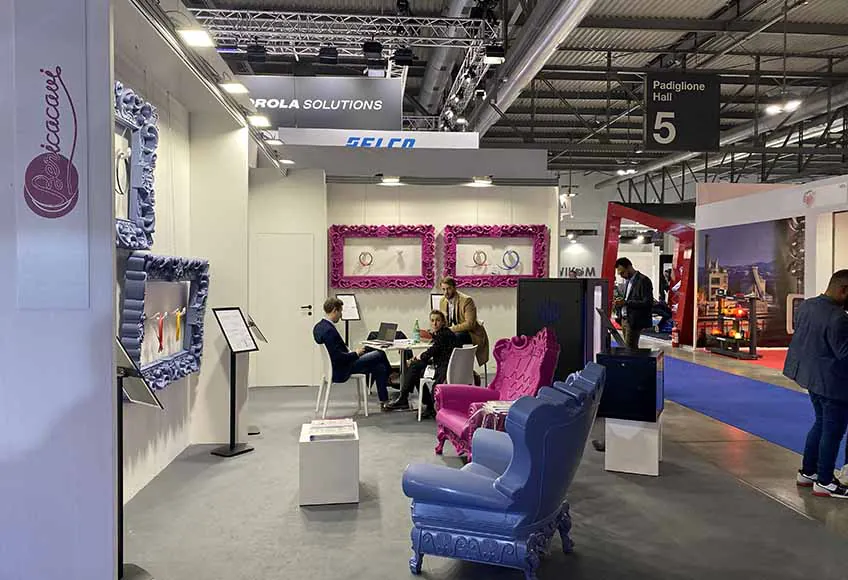
Why Visitors Ignore Some Displays Instantly
Some exhibition spaces lose attention before interaction even begins.
The most common reason is visual overload. When attendees see too many products, oversized graphics, flashing screens, and competing messages at the same time, they stop trying to understand the setup altogether.
Another issue is unclear positioning. If people cannot immediately understand what the company does, most of them simply continue walking.
Sales pressure creates another problem. Booth staff who approach every passerby too aggressively often reduce engagement instead of increasing it. Visitors need a moment to process the environment before deciding whether they want interaction.
And finally, many displays fail because they lack a focal point. Without one clear visual anchor, the entire space starts blending into the surrounding exhibition hall.
The strongest trade show display ideas solve these problems by simplifying attention instead of competing for more of it.
Most common trade show display mistakes
Even visually attractive booths can fail if the setup creates friction instead of interaction.
The most common mistakes exhibitors still make include:
- trying to display every product category at once
- oversized text walls nobody reads
- passive screens without interaction
- poor lighting that flattens the space visually
- overcrowded tables filled with brochures and giveaways
- booth staff approaching attendees too aggressively.
In many exhibition environments, simplifying the experience creates stronger engagement than adding more visual elements.
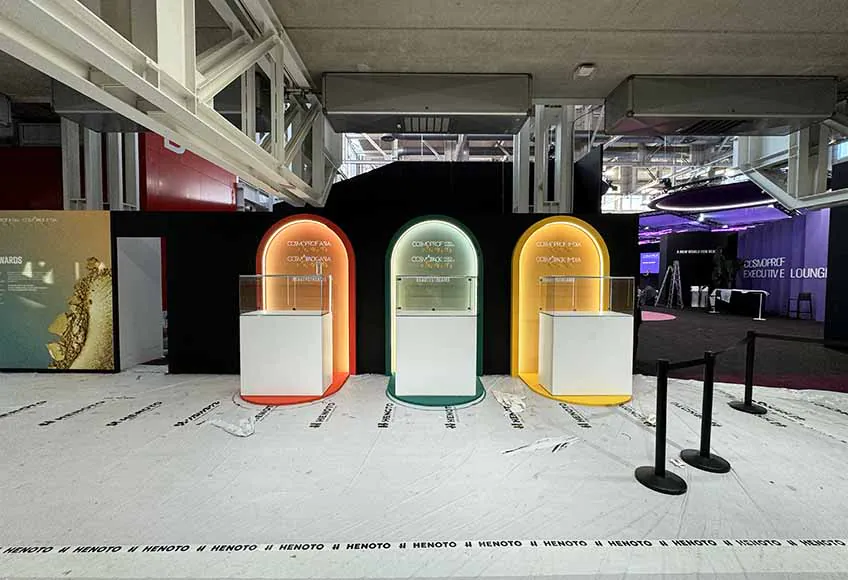
Trade Show Table Display Ideas for Small Spaces
Smaller booths force better prioritization. Ironically, that often improves the final result.
Tabletop display ideas for product presentation
The strongest trade show tabletop display ideas rarely maximize quantity. Instead, they maximize visibility.
Simple risers, layered presentation, and vertical structures often perform better than flat table layouts where every product competes equally for attention.
These types of table display ideas for trade shows work especially well for cosmetics, packaged products, electronics, and retail accessories, where people need to understand products quickly.
Compact setups for limited booth space
A crowded table instantly makes a space feel smaller and more stressful.
Effective trade show table display ideas use vertical space strategically through:
- shelving
- lightweight frames
- suspended signage
- narrow digital displays.
This keeps the trade show table setup visually open while still communicating enough information to attendees moving quickly through the aisle.
The most successful display table ideas usually behave more like retail merchandising than storage.
Portable and reusable table displays
More companies now participate in multiple regional trade shows instead of concentrating their entire budget into one large exhibition.
Because of that, portability matters much more in 2026 than it did a few years ago. Reusable trade show table displays and modular systems reduce logistics pressure while making setups faster for smaller exhibition teams.
This is also why adaptable table top display ideas continue growing in popularity across industries.
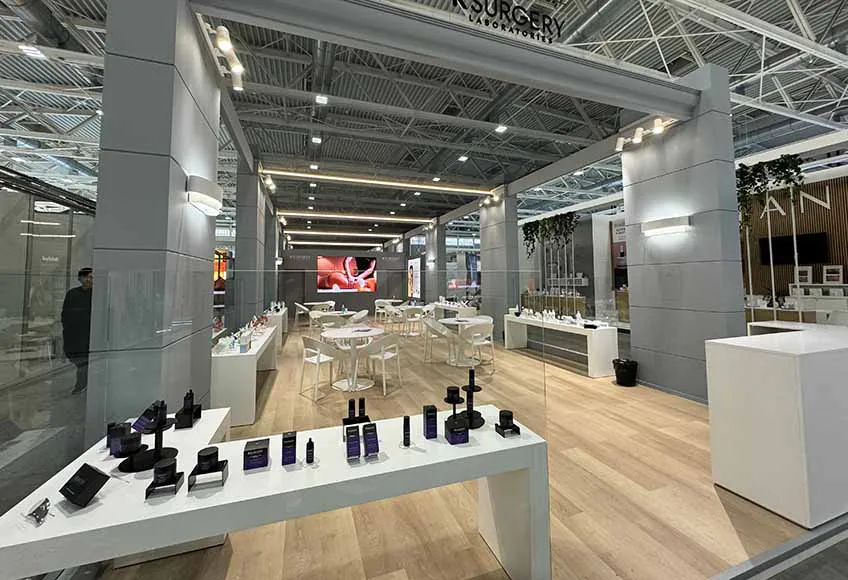
Creative Trade Show Display Ideas
Creativity is no longer about building the biggest booth in the hall. It’s about creating moments people remember — or photograph.
What makes a trade show display memorable?
Visitors rarely remember booths because they were large or expensive. In most cases, memorable exhibition spaces create one clear visual impression and make interaction feel effortless. Simplicity, movement, lighting, and focused messaging usually outperform overloaded environments competing for attention from every direction.
Lighting, motion, and interactive elements
Movement attracts attention before graphics do.
That’s why even simple expo table ideas become significantly more noticeable when lighting or motion is integrated correctly. Animated content, soft LED transitions, or reactive lighting can dramatically improve visibility without making the environment feel chaotic.
People naturally move toward spaces that feel visually active.
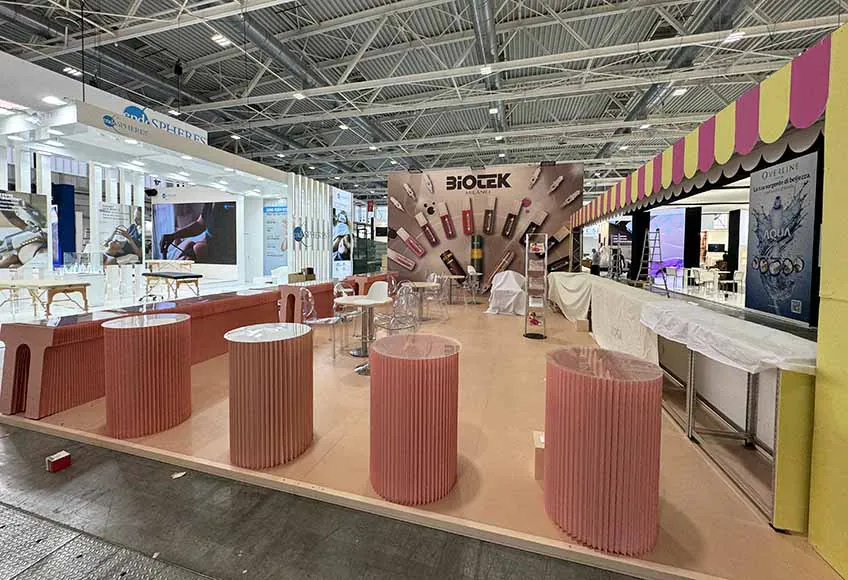
Branded props and visual accents
Some exhibition spaces today are designed almost entirely around photography — and that can become a problem.
Photo zones, branded props, and personalized items often perform extremely well on social media because visitors naturally interact with them. But if those elements block product visibility or interrupt traffic flow, the setup stops functioning commercially.
The strongest convention table displays balance visibility, interaction, and movement at the same time.
Digital screens and QR-based engagement
Large screens alone no longer impress people.
One of the most common mistakes in modern trade show display planning is installing oversized displays with passive content nobody actually watches. Most attendees don’t even pause long enough to understand what’s playing.
The most effective trade show tabletop display ideas use screens selectively:
- short visual loops
- interactive navigation
- quick demos visitors can control themselves.
In many environments, one focused screen performs better than five competing animations.

Budget-Friendly Trade Show Display Ideas
Good displays are not always expensive. In many cases, clarity creates more impact than production cost.
Low-cost materials
Fabric backdrops, printed panels, and modular counters remain some of the best trade solutions for smaller exhibitors.
Cheap-looking setups usually fail not because of the materials themselves, but because unrelated visual styles get mixed together. Consistency matters far more than price.
Reusable display elements
Reusable systems reduce both cost and operational stress.
That’s why interchangeable graphics, modular counters, and foldable structures continue dominating modern convention table displays and expo table display ideas.
In practice, reusable systems often outperform custom one-time builds for growing brands attending multiple events annually.
Simple upgrades that improve visibility
Sometimes small adjustments create the biggest improvements.
Better lighting. Cleaner signage. More open spacing. Reduced clutter.
These upgrades improve visibility far more effectively than simply adding more graphics, products, or giveaways to the environment.
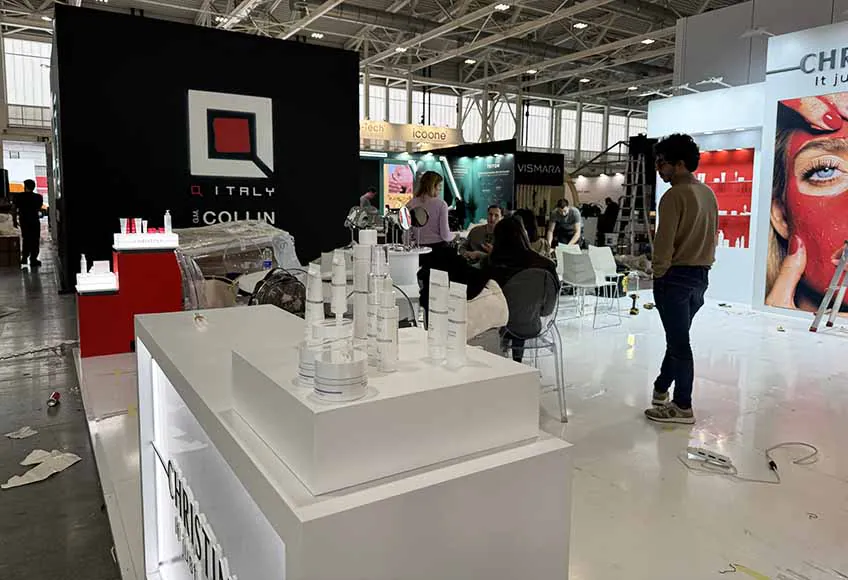
How to Set Up a Trade Show Display Table
A display table should guide attention naturally instead of forcing people to search for information.
Table layout and product placement
When thinking about how to set up a display table, visibility should always come first.
The most important products should be visible immediately — not hidden behind brochures, giveaway piles, or oversized decorative elements. Effective trade show table setup strategies create layers and focal points instead of placing everything flat on one surface.
The best trade show table ideas reduce visual noise and simplify scanning.
Signage, brochures, and giveaways
Printed materials still matter — but only when people can process them quickly.
Strong promotional table ideas typically rely on:
- one central message
- concise brochures
- practical giveaways people actually keep.
Brochure overload remains one of the fastest ways to make an exhibition space feel outdated and difficult to approach.
Common setup mistakes to avoid
The same display problems appear repeatedly across different industries:
- overcrowded tables
- unreadable signage
- blocked visitor flow
- oversized screens with passive content
- giveaway clutter near products.
Strong expo table ideas remove friction instead of adding more visual information people need to process.

Quick Trade Show Display Checklist
Before finalizing your booth setup, make sure:
- attendees can understand your main message within seconds
- products are visible without visual clutter
- lighting supports focal points instead of flattening the space
- screens contain short, easy-to-process content
- tables are organized for interaction, not storage
- booth staff allow visitors time to engage naturally.
Small adjustments in booth presentation often create larger results than expensive design upgrades.
FAQ
Why do some trade show displays attract attention while others get ignored?
An effective display communicates information quickly, reduces confusion, and naturally guides visitors toward interaction. Strong booth layouts usually rely on clear messaging, focused product presentation, and simple navigation.
How do you make a small trade show booth stand out?
Smaller booths stand out more effectively when they avoid clutter. Focused tabletop display ideas, strategic lighting, vertical presentation, and one strong visual message usually perform better than overcrowded setups.
What are the best reusable trade show display ideas?
Modular counters, interchangeable graphics, portable shelving systems, and lightweight trade show table displays are some of the most practical reusable solutions for brands attending multiple exhibitions each year.
What are the best trade show table display ideas for small booths?
The most effective trade show table display ideas for compact spaces usually focus on vertical presentation, clean product hierarchy, and minimal clutter. Smaller setups perform better when attendees can immediately understand where to look and how to interact with the display.
Which table display ideas for trade shows work best for product-based brands?
Some of the strongest table display ideas for trade shows use layered presentation, focused lighting, and simple interaction points instead of overcrowded product arrangements. This approach works especially well for cosmetics, electronics, packaged goods, and retail accessories.
How do display table ideas improve attendee engagement?
Well-structured display table ideas reduce friction and make interaction feel more natural. When products, signage, and giveaways are organized clearly, attendees spend less time processing the setup and more time engaging with the brand.
Why are reusable table top display ideas becoming more popular?
Reusable table top display ideas have become increasingly popular because they reduce logistics costs and make exhibition setups faster to manage across multiple events. Modular systems also give brands more flexibility when adapting displays to different booth sizes.
Final Thoughts
The best trade show display ideas in 2026 are not necessarily the biggest or most technologically advanced ones. They are the setups that help attendees understand, engage, and interact within the first few seconds.
Whether you are planning compact trade show tabletop display ideas or a full trade show booth, clarity almost always outperforms complexity. A display that feels intuitive creates smoother conversations, stronger brand perception, and better results throughout the entire trade show.
For brands participating in competitive international trade shows, strong display strategy often matters just as much as booth construction itself. The most effective exhibition spaces are usually planned around visitor behavior long before production begins.