



A well-designed trade show booth backdrop does much more than fill an empty wall. It helps visitors identify your company, understand what you offer, and decide whether your booth is worth a closer look.
In crowded exhibition halls where hundreds of brands compete for attention, the backdrop is often one of the first things attendees notice from across an aisle.
Industry studies consistently show that trade show visitors form impressions quickly. In many cases, exhibitors have only a few seconds to communicate who they are and why someone should stop. That makes a trade show backdrop far more than a decorative element. It becomes part of your marketing strategy, supporting visibility, brand recognition, and lead generation throughout the event.
Whether you’re preparing for your first exhibition or refreshing an existing booth, understanding how backdrop systems work can help you make better decisions about design, budget, and long-term usability.
What Is a Trade Show Booth Backdrop (and Why It Matters More Than You Think)
A trade show booth backdrop is the large graphic wall or branded structure positioned behind your exhibit space. It usually contains logos, product visuals, key messages, and supporting graphics that help visitors understand your company at a glance.
Many exhibitors think of a backdrop as a printed wall. In reality, it plays a much bigger role in overall trade show exhibit design. Visitors rarely evaluate individual booth components separately. Instead, they see the entire stand and remember the strongest visual element within it. A well-planned backdrop for trade show booth layouts helps create that first impression and supports every conversation that follows.
Types of Trade Show Backdrops
Not every backdrop is designed for the same purpose. The right solution depends on your budget, exhibition schedule, booth size, branding requirements, and logistics.
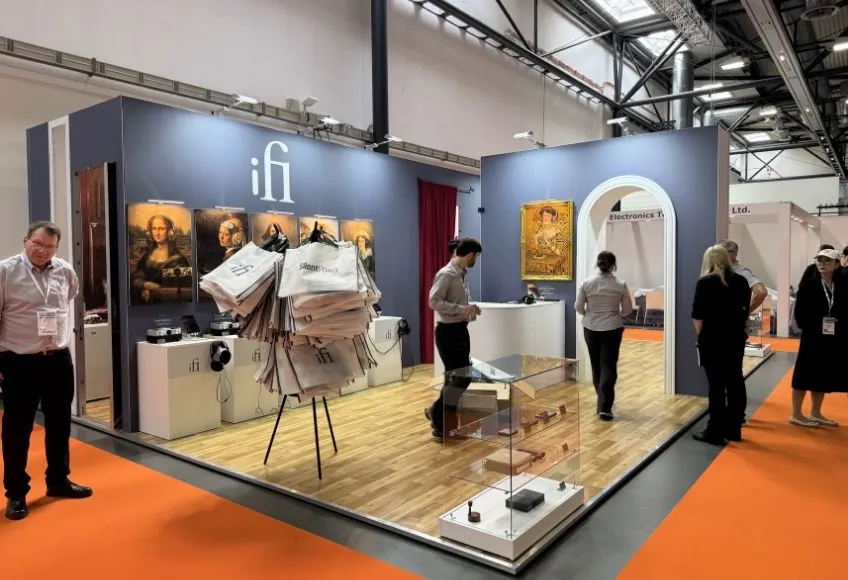
Tension Fabric Backdrops
A fabric trade show backdrop combines a lightweight aluminum frame with a stretched textile graphic. It remains one of the most popular solutions because it balances appearance, portability, and cost.
The matte surface reduces glare from trade show lighting, making graphics easier to view and photograph. A quality tension fabric display works well for most industries and can often be reused at multiple events.
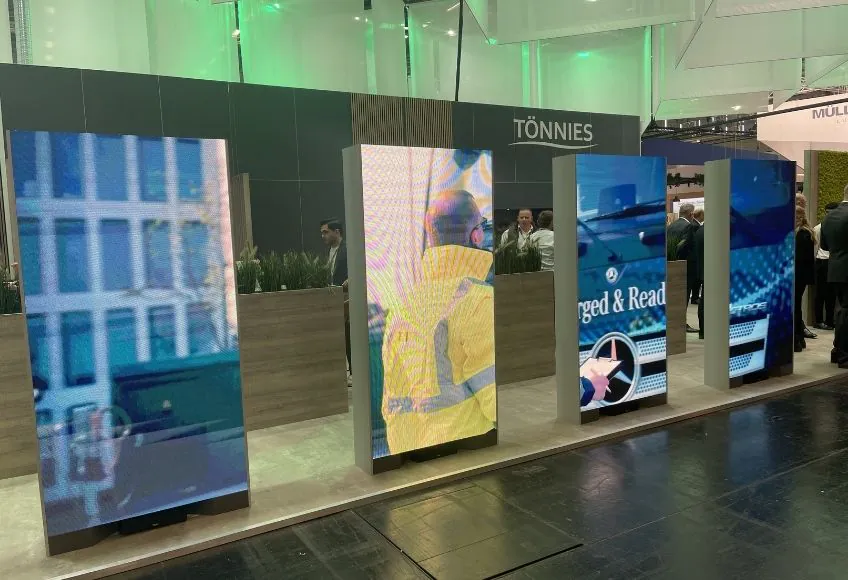
Pop-Up Backdrops
Pop-up systems are designed for portability and quick installation. They are often chosen by companies attending smaller events, roadshows, or their first exhibition.
A trade show backdrop 10×10 setup using a pop-up system can typically be assembled without specialized tools and transported with minimal logistics requirements.
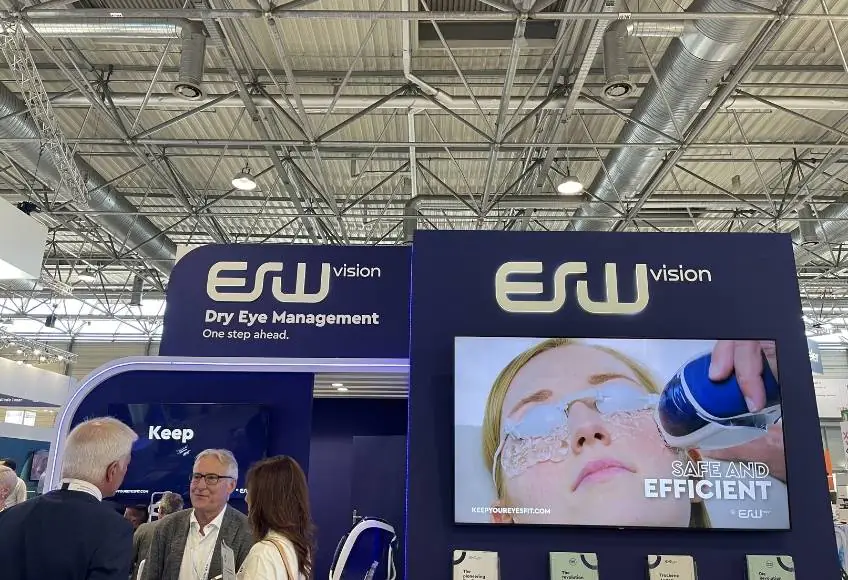
Modular Backdrop Systems
Modular systems have become increasingly popular among exhibitors who participate in multiple trade shows each year. In many stand-building projects, they account for approximately half of all backdrop solutions.
A modular trade show display can grow alongside a company’s exhibition program. A business may start with a 10×10 booth backdrop and later expand the same system into a larger configuration with meeting areas, storage rooms, shelving, digital screens, and additional branding elements.
For exhibitors attending five or more events annually, modular solutions often provide the strongest long-term return on investment.
For example, a company may begin with an 18 m² booth at a regional exhibition and later book a 36 m² space at an international event. Instead of purchasing an entirely new structure, many modular systems can be reconfigured using the same framework and updated graphics. This flexibility is one of the main reasons modular backdrops remain a preferred choice for frequent exhibitors.
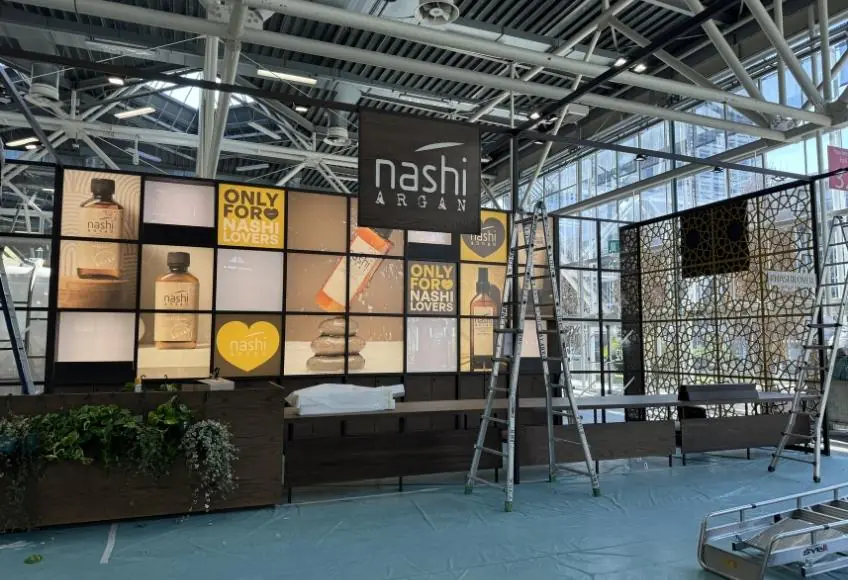
LED Backlit Displays
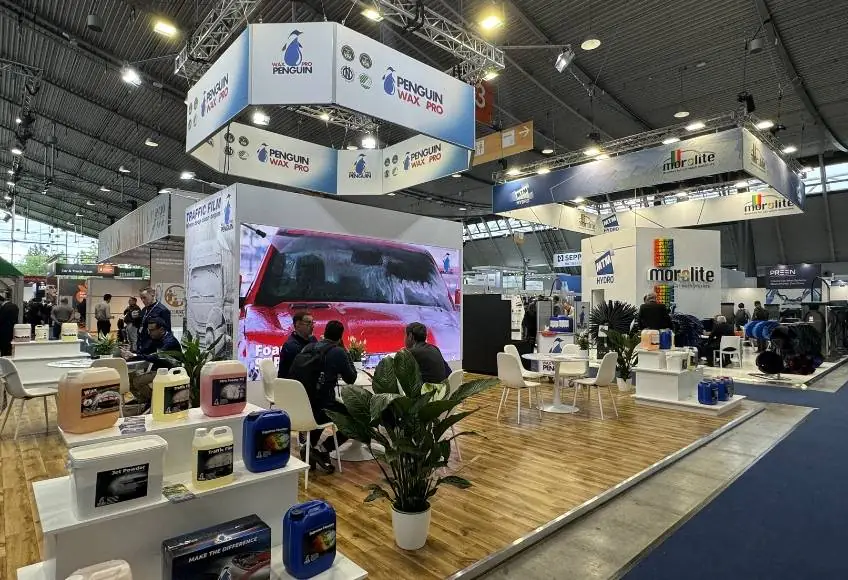
A backlit trade show backdrop uses integrated lighting to illuminate graphics from within. These systems create a premium appearance and can attract attention from greater distances, particularly in large exhibition halls.
However, LED is not automatically the right answer for every booth. In brightly lit venues, especially when graphics use lighter colors and additional wall lighting is already planned, a standard fabric backdrop may achieve a very similar visual effect at a lower cost.
Many first-time exhibitors assume that illumination alone increases booth performance. In practice, results depend on how effectively the lighting supports the message. A well-designed LED display with one clear visual can be highly effective, while a brightly illuminated wall packed with multiple messages may still go unnoticed.
Many premium exhibition projects use a LED lightbox display as the central branding feature, especially when product visibility and long-distance recognition are priorities.
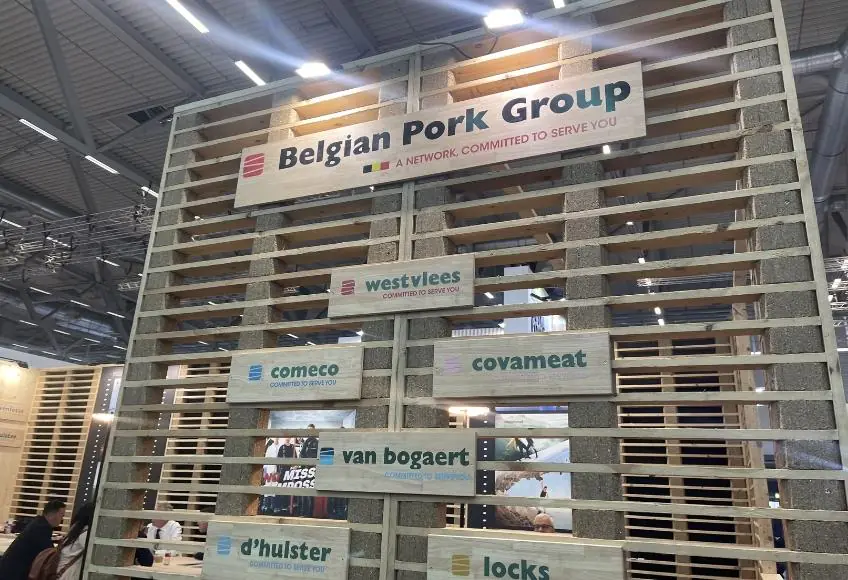
Retractable Banner Backdrops
Retractable banners remain the simplest and most portable option available. A trade show backdrop banner can be useful for supplemental branding, product launches, or compact promotional spaces.
Although affordable and easy to transport, they generally cannot provide the same visual impact as larger trade show backdrop displays.
Most retractable systems are built around a retractable banner stand, making them easy to transport, store, and assemble without professional installation crews.
Quick Comparison of Popular Backdrop Systems
| Backdrop Type | Initial Cost | Reusability | Setup Speed | Best For |
|---|---|---|---|---|
| Fabric | Medium | High | Fast | Most exhibitors |
| Pop-Up | Low | Medium | Very Fast | First-time exhibitors |
| Modular | Medium-High | Very High | Medium | Frequent exhibitors |
| LED Backlit | High | High | Medium | Premium branding |
| Retractable Banner | Low | Low | Very Fast | Supplemental displays |
How to Choose the Right Backdrop for Your Booth
The best custom trade show backdrop is not necessarily the most expensive one. It is the solution that supports your exhibition goals, floor plan, and available budget.
When researching trade show backdrop ideas, many exhibitors focus on graphics first. In practice, booth size, visitor flow, exhibition frequency, and branding goals usually have a much bigger impact on the final result.
Booth Size and Floor Format
Many European exhibitors work within the 18–35 m² range. In these spaces, the backdrop must work alongside furniture, meeting areas, product displays, and visitor traffic.
A 10×10 trade show backdrop may be perfectly suitable for a compact booth, while larger island stands often require more substantial structures and integrated branding features.
Show Travel Frequency and Logistics
A company exhibiting once per year faces different challenges than a business participating in ten events.
When evaluating an exhibit booth backdrop, transportation, storage, durability, and installation costs should be considered alongside the purchase price. Frequent exhibitors often achieve better value through reusable modular systems.
Brand Goals: Visibility vs. Practicality
Before recommending a backdrop booth solution, experienced stand builders usually ask several questions:
- What is the booth size?
- Will the stand require water, electricity, compressed air, or other technical connections?
- What budget is available?
- What are the company’s objectives for the exhibition?
The answers influence everything from flooring requirements to booth branding, graphic development, and structural design.
What We Usually Recommend to First-Time Exhibitors
For companies exhibiting for the first time, simplicity often delivers the best return on investment.
A modular structure with graphic walls, standard lighting, practical flooring, and a reception counter usually creates a professional appearance without unnecessary complexity or cost.
Exhibitors working with very limited budgets may benefit from starting with the organizer’s shell scheme package rather than investing in a fully custom-built exhibition stand. In many cases, this approach provides a more practical starting point while allowing the company to evaluate exhibition performance before increasing investment.
How Exhibitors Should Choose a Backdrop
Trade Show Backdrop Design: What Actually Works
The most successful backdrop designs are rarely the most complicated ones.
Companies researching how to design a trade show booth often start with colors and graphics. In practice, successful booth design begins with visitor flow, business objectives, and the message that should be visible from the aisle.
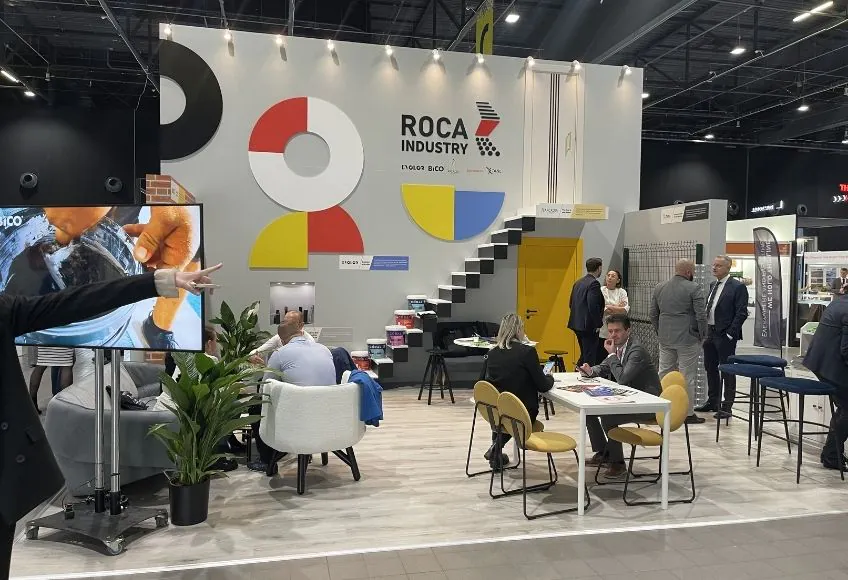
The Golden Zone: Where to Place Logo and Headline
The most important information should be visible above visitor head height and readable from the main aisle.
Established brands often prioritize logo visibility. Newer companies may benefit more from highlighting a flagship product, service, or value proposition.
Typography Rules for Exhibition Graphics
Visitors rarely stop in the middle of an aisle to read detailed information. Most people scan a booth while walking and decide within seconds whether it deserves a closer look.
Large headlines, limited text, and clear hierarchy consistently outperform dense blocks of information. Effective trade show backdrop design allows visitors to understand the message immediately rather than forcing them to read it.
If your primary message cannot be understood from several meters away, it will probably struggle on a busy show floor.
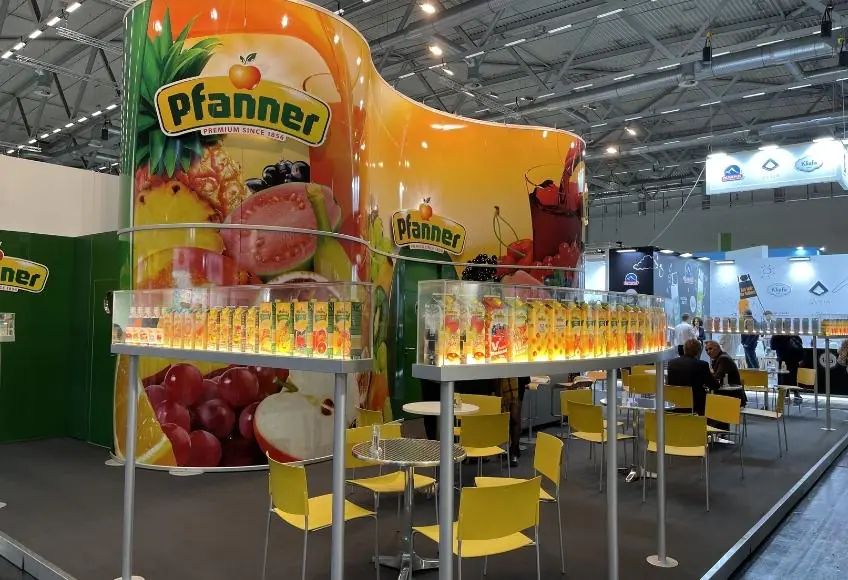
Gloss vs. Matte: Why Material Finish Affects Photography
Material finish is often overlooked during planning.
Glossy graphics can create reflections that reduce readability and complicate event photography. Matte surfaces, commonly used in modern trade show display graphics, typically provide cleaner visual results under exhibition lighting conditions.
Color, Contrast and Brand Consistency
Strong contrast improves visibility, especially in halls where attendees are exposed to hundreds of visual messages throughout the day.
Brand consistency is equally important. The most effective booth backdrop design projects reinforce recognition rather than introducing unnecessary visual complexity.
What Visitors Actually Notice First
Many exhibitors assume visitors notice the logo first. In reality, attendees usually notice the overall impression of the stand and the strongest visual element within it.
For an established company, that focal point may be the logo itself. For a newer brand, it may be a product image, demonstration, or key product benefit. LED screens can also perform well when they communicate a single message clearly.
Walk through almost any major trade show and a pattern quickly becomes obvious: the booths that attract attention are not necessarily the largest. They are usually the easiest to understand from a distance. A backdrop should support the booth, not compete with it.
Common Trade Show Backdrop Mistakes to Avoid
Certain mistakes appear repeatedly across industries and exhibition formats.
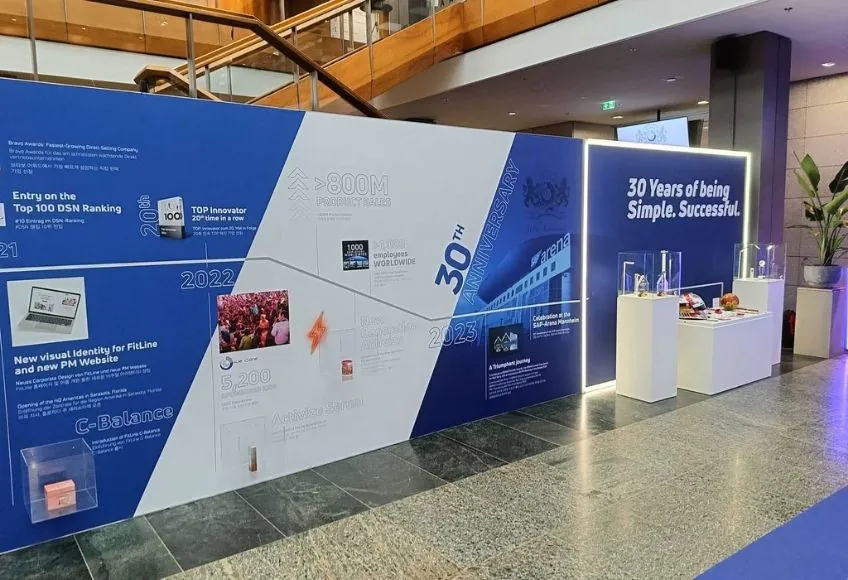
Using Too Much Text
One of the most common problems is treating the backdrop like a brochure enlarged to wall size.
Visitors walking through an exhibition rarely stop to read paragraphs. One clear message almost always outperforms several competing messages.
Using Low-Resolution Graphics
A graphic that looks acceptable on a laptop screen may appear blurry when enlarged to several meters wide.
Professional trade show booth backdrop ideas should always begin with print-ready artwork and high-resolution images.
Delivering Artwork Too Late
This is one of the most expensive mistakes exhibitors make.
Even a simple expo booth backdrop can become a rush project if final graphics arrive only a few days before production begins. Delays often increase costs, limit quality-control opportunities, and create unnecessary pressure during the final weeks before the event.
Many backdrop problems originate long before manufacturing starts. Incomplete artwork, last-minute logo revisions, and unresolved dimensions frequently create more complications than the printing process itself.
Choosing a Backdrop That Doesn’t Match the Booth
An oversized backdrop can overwhelm a small stand. A minimal backdrop can disappear inside a large exhibition space.
Successful trade show booth backdrop ideas always consider the entire booth environment rather than focusing on the wall alone.
How Much Does a Trade Show Booth Backdrop Cost?
The cost of a booth backdrop depends on several factors:
- Overall dimensions
- Materials
- Graphic complexity
- Lighting integration
- Structural requirements
- Reusability goals
A simple booth display backdrop may cost significantly less than a modular or illuminated solution. However, total value should always be evaluated across multiple events rather than a single exhibition.
How to Order a Custom Trade Show Backdrop Through a Stand Builder
Professional stand builders typically develop backdrop solutions as part of a complete booth project rather than as standalone products.
A complete exhibition project may include:
- Booth planning and concept development.
- Design and visualization.
- Creation of exhibition stand graphics.
- Manufacturing and construction.
- Installation and dismantling.
- Storage and logistics support.
Companies that exhibit regularly often benefit from working with a single contractor that manages booth construction, graphics, transportation, installation, dismantling, and storage through one coordinated process. This approach can simplify planning, reduce administrative work, and improve consistency across multiple events.
FAQ
What size should a trade show backdrop be?
The backdrop should match booth dimensions, venue regulations, and visitor flow requirements. A trade show backdrop 10×10 is common for smaller exhibition spaces, while larger booths typically require custom dimensions.
Can I reuse my trade show backdrop at multiple shows?
Yes. Many modular systems are specifically designed for reuse. A quality tradeshow booth backdrop can be adapted to different floor plans and exhibition formats.
What file format do I need for backdrop printing?
Most print providers prefer high-resolution PDF, AI, or EPS files prepared according to production specifications.
How far in advance should I order a trade show backdrop?
As a general guideline:
- Fabric solutions: approximately one week
- Modular systems: approximately two weeks
- LED projects: up to one month
Projects involving custom elements or complex fabrication may require additional time.
What is the difference between a backdrop and a trade show display?
A backdrop is usually one component of a larger display system. A complete exhibition environment may also include flooring, counters, meeting areas, storage rooms, screens, booth signage, product displays, and other structural elements.
Final Thoughts
A successful trade show backdrop, backdrop for booth, or custom trade show backdrop is not defined by its size, lighting package, or price tag. It succeeds when it supports the exhibitor’s goals, strengthens brand recognition, and helps visitors understand the message within seconds.
The most effective backdrops are rarely the busiest ones. They focus attention on a single idea and support the overall booth experience instead of competing with it.
Many exhibitors discover that the right backdrop decision is made long before graphics are printed. It starts with understanding the goals of the stand, the available budget, and the practical requirements of the event. Those factors will influence the final design far more than the backdrop technology itself and can help prevent costly changes later in the project.