



A booth that works well at one exhibition can become restrictive at the next when the footprint, number of open sides, product story, venue rules, or campaign priorities change. A modular trade show booth can be attractive because it offers a way to keep useful elements in circulation while changing the parts that no longer fit.
That does not make modular automatically cheaper, faster, easier to manage, or less impactful environmentally. The practical question is whether a proposed system can absorb the changes in your exhibition program without shifting disproportionate cost or complexity into new custom elements, logistics, storage, labour, or repeated redesign. That is the comparison to make before choosing modular, custom, or hybrid construction.
What a Modular Trade Show Booth Must Mean for This Program
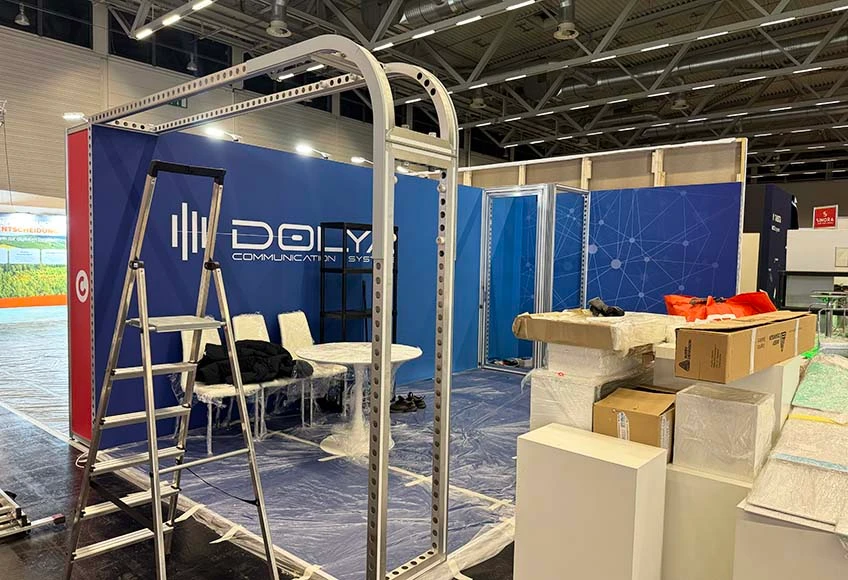
For a recurring exhibition program, “modular” describes a construction and design approach, not a promise of low cost, instant setup, or unlimited flexibility. A modular trade show booth uses compatible structural components that can be assembled into planned configurations and, where the system and design allow, used again in a later configuration.
It is more useful to think of the booth as a kit of compatible elements than as one stand that is simply rebuilt. Some elements may remain useful across configurations, while graphics, counters, displays, lighting positions, meeting areas, and branded features may change with the footprint, campaign, or product. The important question is not only whether the booth can be reused, but which parts can realistically serve the next brief.
A fully custom build is principally designed for one specific stand and may be difficult or uneconomic to adapt later. A portable display generally prioritizes transportability and simple deployment over architectural presence, integrated functions, or broad spatial flexibility. A hybrid booth combines reusable modular structure with custom-made elements where the brand, product display, or layout needs something the system alone cannot provide.
Rental is a separate ownership and delivery decision. A modular booth may be rented, while custom and hybrid booths can also be supplied through a rental or project-delivery model. Modular, custom, and hybrid describe how the stand is conceived and built; rental addresses who owns, stores, and manages the assets. Keeping those decisions separate makes proposals easier to compare.
Where Modular Creates Operational Value
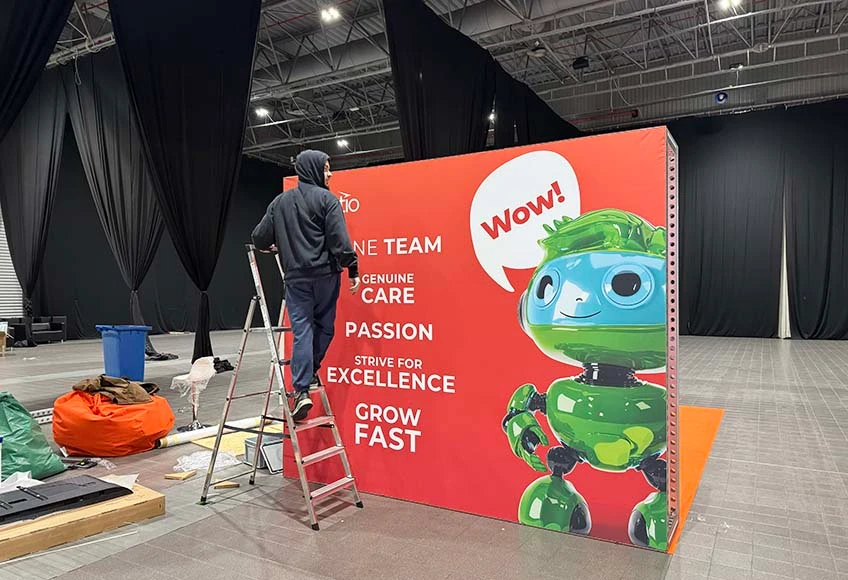
Modular value begins with controlled reconfigurability. Rather than treating every exhibition as a complete restart, an exhibitor can retain compatible structural elements and redesign the next configuration around a different footprint, visitor flow, product story, or meeting requirement.
The useful unit of reuse is not necessarily the entire previous booth. It is a documented kit of compatible elements, together with a workable process for allocating, installing, dismantling, identifying, packing, inspecting, and returning those elements to controlled inventory. A component in storage has limited value if its condition is unknown or the next design cannot use it. The reusable structure gives the next project a starting point; it does not remove the need for design, engineering, graphics, logistics, or venue planning.
What can change without starting from zero
A well-planned system can preserve a structural base while changing visible and functional parts of the stand. A larger island configuration may, for example, be adapted into a smaller corner stand by using selected frames, flooring interfaces, storage modules, counters, and lighting positions differently. Graphics can be refreshed, product zones moved, a meeting area substituted for a demonstration point, and branded surfaces added or removed.
That is reconfiguration, not a guarantee that every part of the first stand will transfer. The practical test is to identify what stays, what moves, and what must be made again. Where the new brief exceeds the system’s fit, the design must adapt to the reusable structure or be supplemented with new custom elements.
Future configuration drawings are more useful than a broad promise of indefinite reuse. Ask to see plausible inline, corner, peninsula, or island scenarios that reflect the exhibition program you expect to run. If the reusable core cannot be clearly identified before the first event, the claimed flexibility may be more theoretical than operational.
Can Modular Save Setup Time?
A prepared and familiar system may support a more efficient setup or reduce installation-and-dismantling complexity when the components, artwork, decisions, production capacity, and venue installation window are ready. Available reusable components can avoid producing the complete structural solution from scratch, and familiar crews can reduce structural-system novelty. Neither point establishes a quantified labour or time saving.
Speed is conditional rather than a feature of the modular label. A compressed delivery schedule depends on several conditions aligning: usable components must be available, the design must work with the system, production capacity and materials must be available, artwork and decisions must be ready, and site access and installation timing must be viable.
Late design changes, difficult access routes, unavailable materials, or a layout requiring extensive custom work can remove any delivery advantage. Ask what specifically makes the proposed build more efficient, rather than accepting “modular is faster” as the answer.
How Should You Judge the Cost of Modular?
Reuse can spread the value of compatible components across suitable events, but the first-event quote is not the whole cost model. If retained components continue to fit future briefs, they may reduce the need to recreate those elements. That does not make every later stand inexpensive.
Compare new production and custom additions with graphics refreshes, logistics, storage, maintenance, installation, dismantling, repairs, and the commercial terms of ownership or rental. Also ask what will need to be produced again when the footprint, product display, or brand message changes.
The relevant comparison is the cost of the exhibition program across realistic configurations. A modular system is cost-effective only when its retained components continue to serve future briefs without creating greater compromise or adaptation cost elsewhere.
Is Modular More Sustainable?
Keeping usable structure in circulation can avoid replacing it after one event, which is a relevant mechanism to assess. It is not proof that modular construction automatically has a lower environmental impact.
Packing, transport distance, storage, repairs, graphics replacement, new production, and the number of meaningful future uses all affect the outcome. A system that is repeatedly used in suitable configurations presents a different situation from one that requires frequent additions, replacement parts, or long periods of inactive storage.
Treat reuse as a project-specific factor to assess, not as a universal sustainability claim.
Why Some Modular Solutions Look Generic and Others Do Not
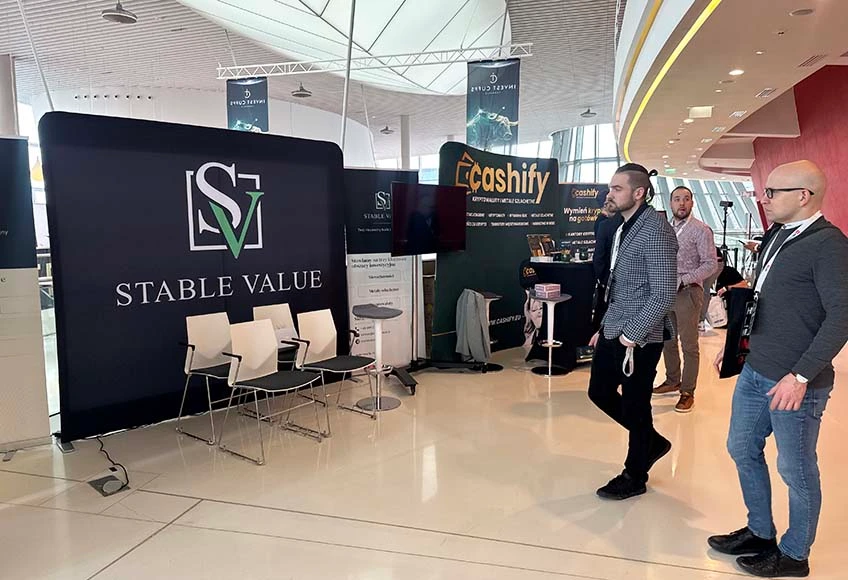
A generic-looking result is not usually caused by modular structure alone. It appears when the system is treated as the finished design: repeated bays, default graphics, flat lighting, standard counters, and no clear spatial hierarchy can make brands look interchangeable. This is a greater concern when the stand must communicate a premium offer, demonstrate technical products, host focused conversations, or compete in a visually crowded hall.
The reusable system determines what the stand can do. The design determines what visitors actually experience. The system provides connection logic, repeatable dimensions, and structural possibilities; visitors experience the layout, graphics, lighting, materials, products, screens, furniture, and focal elements built around that framework.
Graphics can establish message hierarchy, lighting can create emphasis and depth, and furniture and counters can shape interaction. A clear entrance, product zone, storage solution, and meeting area can make the same structural components read very differently from an undifferentiated run of bays.
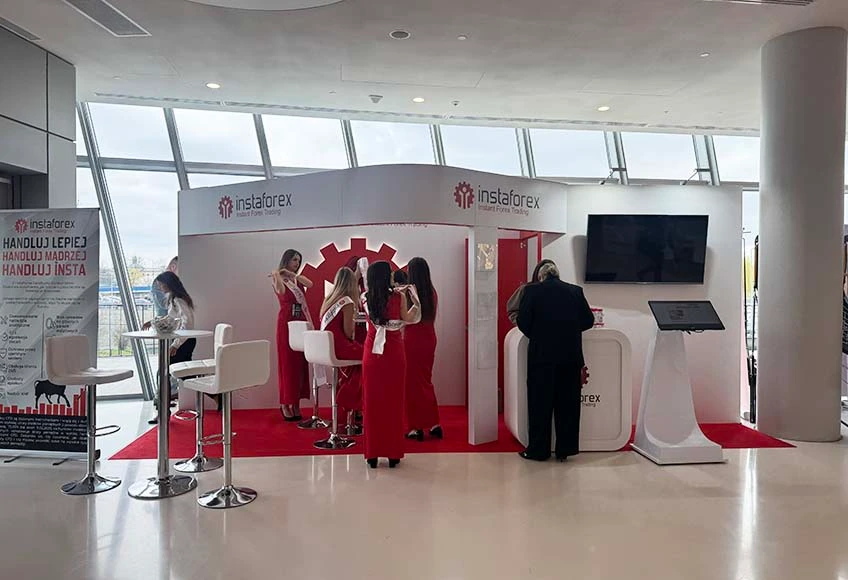
A hybrid approach can address requirements that the reusable framework alone cannot meet. The framework can carry repeatable architectural work while a reception point, product plinth, feature wall, illuminated sign, or bespoke display provides a distinctive branded element. The aim is not to conceal every modular component with custom production, but to use custom work where it makes a meaningful difference to the visitor experience or function.
When reviewing a supplier proposal, ask what is standard, what is custom, what is intended for reuse, and what will remain visually strong when the stand is adapted to another footprint. A credible rendering should be supported by plans, graphics, connections, lighting, technical equipment, access requirements, and venue constraints. The design may need to be adapted to the reusable system’s dimensions and connection logic; that is different from assuming the system can absorb every design without compromise.
How to Evaluate Whether Modular Fits Your Exhibition Program
Evaluate modular against the program rather than against an abstract category label. Put the next few events beside each other and review likely stand sizes, open sides, venue restrictions, product-launch cycles, storage needs, and the degree of change expected in the brand message.
Modular may provide a useful reusable base when several events share enough spatial and functional requirements. The stand does not need to look identical at every event, but there needs to be something worth carrying forward: structure, storage, technical elements, functional modules, or a combination of them. A custom or hybrid solution may fit better when each event needs radically different architecture or a highly bespoke product environment.
Make the ownership decision separately.
Buying requires a clear plan for repeated use, storage, maintenance, inventory control, and asset responsibility. Renting can reduce storage and asset-management responsibilities without preventing the stand from being modular. First decide which construction approach fits the program; then decide whether ownership or rental is commercially and operationally appropriate.
Checks for a proposed modular solution
Use the proposal review to turn broad flexibility claims into specific decisions. The most revealing request is often: show us what happens at exhibition number two.
| Review area | What to ask for | What it helps establish |
|---|---|---|
| Reuse plan | A component schedule identifying the structural, flooring, storage, counter, lighting, and display elements intended for retention. | What is actually reusable rather than generally described as reusable. |
| Future configurations | Plausible inline, corner, peninsula, and island scenarios, showing what transfers and what needs replacement or supplementation. | Whether the system fits likely future footprints. |
| Design boundaries | Maximum heights, spans, load allowances, graphics formats, finishes, and technical integrations. | Whether modular, custom, or hybrid construction is the appropriate fit. |
| Venue compatibility | Hall height, rigging rules, fire and electrical requirements, floor loading, access routes, loading times, installation windows, and rules for suspended or enclosed elements. | Whether the concept can work at each venue. |
| Logistics and asset responsibility | Storage, packing, inspection, repairs, transport, tracking, and—if renting—what the supplier retains and includes per event. | Who carries the operational responsibility between shows. |
| Installation assumptions | Whether efficiency depends on preconfigured components, familiar crews, approved drawings, ready artwork, production capacity, or a simple layout. | Whether setup expectations are realistic for the project conditions. |
| Design evidence | Plans, elevations, material samples, lighting intent, technical layouts, and comparable system execution. | Whether the delivered stand is likely to avoid a generic appearance. |
| Cost model | New production, reuse, graphics updates, custom additions, logistics, storage, maintenance, installation, dismantling, and ownership or rental terms. | The full program cost rather than only the first-event quote. |
A useful proposal makes the trade-offs visible: which components return, which move, which are replaced, and who manages them between events. A weak proposal calls a system flexible without showing its configuration logic, venue assumptions, delivery conditions, or the limits that may shift cost and effort back into the project later.
FAQ
These answers provide short reference points after the program-fit and proposal review.
How much does a modular trade show booth cost?
There is no single reliable price. Compare the full program cost across realistic configurations: production, refreshes, custom additions, logistics, storage, maintenance, installation, dismantling, and ownership or rental terms. Ask what you will pay again at the next exhibition and what you will not.
Can a modular booth look as good as a custom build?
Yes. Brand impact depends on layout, graphics, lighting, product presentation, materials, technology, and focal elements. A hybrid approach can add custom features where they matter most; if system limits begin dictating the visitor experience, custom or hybrid construction may be a better fit.
How many times can a modular booth be reconfigured?
There is no responsible universal number. It depends on component condition, future footprints, venue requirements, design changes, storage and handling, and the custom work needed for each configuration. Ask to see the configurations the supplier expects the system to support.
Is modular better than renting a trade show booth?
They address different decisions: modular describes construction, while renting describes ownership and delivery. Choose the construction approach according to program fit, then choose ownership or rental according to storage capacity, asset-management preference, and commercial terms.
Conclusion
A modular system earns its place in an exhibition program when something worth reusing actually survives from one project to the next—not only in storage or on a component list, but in the next real configuration.
Look across the events you expect to run. Identify what repeats, what changes, what the proposed system can retain, and what will still require new production, adaptation, logistics, and labour. Then ask to see the next plausible configuration, with its component allocation, venue assumptions, additions, and responsibilities.
If the reuse case remains credible there, modular may provide a useful base for the program. If it works only in the first rendering, custom or hybrid construction may be the more credible choice.
Planning Stands for Several Exhibitions?
Send us your upcoming stand sizes, locations, and requirements. We can help you compare where reusable modular structure makes sense and where custom production may be the better choice.